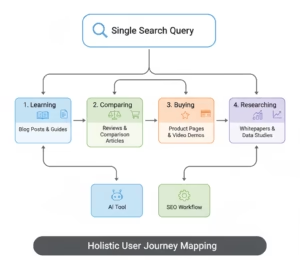
When Google AI Search or its AI Overview mode gives you an answer, it doesn’t just pull it out of thin air — it’s already been working behind the scenes before you even finish your search. One of the most fascinating techniques powering this process is called Query Fan-Out.
This isn’t just another tech buzzword. If you run a website, create content, or do SEO, understanding this technique can help you adapt your strategy for the future of search.
In this article, we’ll unpack exactly what Query Fan-Out is, how it works inside Google’s AI Mode, and how you can optimize your content to take advantage of it.
What Is Query Fan-Out?
At its core, Query Fan-Out is a method where Google takes your original search query and breaks it into multiple smaller or alternate queries.
Why? Because not every search is straightforward. Sometimes your query is too narrow, making it hard to find enough relevant pages. Other times, it’s too broad, making it difficult to provide a precise answer.
Google’s AI Mode uses large language models (LLMs) to create synthetic queries — extra or alternate versions of your original question. These new queries can either widen the scope to find more results or narrow it down to get a more specific answer.
A Real-World Example
Imagine you need a specific plumbing part. You know what it does but don’t know its exact name. When you go to the hardware store, you might describe your problem instead of naming the part. The store clerk will then try to figure out exactly what you mean by asking related questions.
Google’s AI works similarly. It rephrases or expands your search to cover more ground and ensure it has enough high-quality sources to pull from. This is exactly what Query Fan-Out does.
When Queries Are Too Narrow
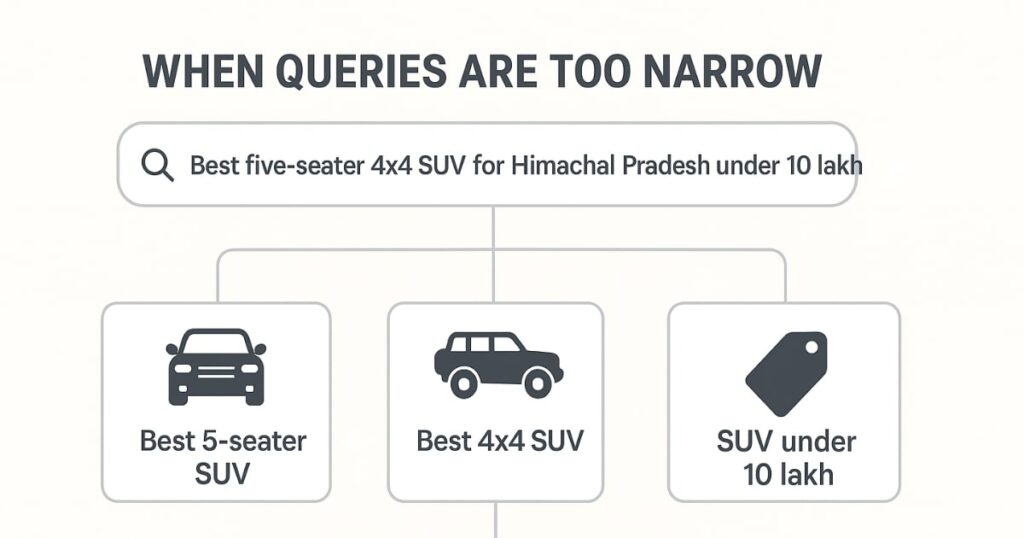
Let’s say you search:
Best five-seater 4×4 SUV for Himachal Pradesh under 10 lakh
This is extremely specific. There might be very few web pages that match this exact combination of criteria.
So, Google breaks it down into multiple related searches:
- Best five-seater SUV
- Best 4×4 SUV
- Best SUV suited for Himachal Pradesh
- Best SUV under 10 lakh
Each of these smaller queries finds more potential “candidate pages.” Then, Google’s Gemini model analyzes these pages, pulls the most relevant details, and combines them into a single final AI answer for your original question.
This method increases the chance of accuracy, but it’s not perfect. Sometimes the AI hallucinates — producing answers that sound confident but are factually wrong. This happens because the system merges data from multiple pages without verifying the combined output.
Just like a new car needs a 1,000 km service check, AI needs adjustments as it learns from real-world use.
When Queries Are Too Broad
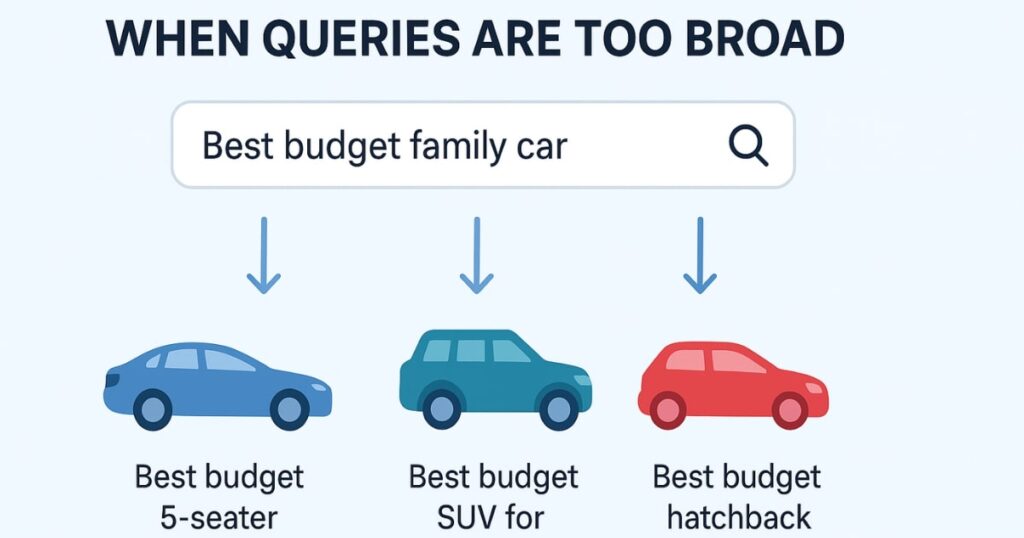
On the other end of the spectrum, you have queries like:
Best budget family car
Here, the problem is too much potential variation. “Best” is subjective, “budget” varies for everyone, and “family” can mean 2 people or 7 people.
In this case, Google uses personalization. If it knows from your search history that you have a five-member household, it might turn your vague query into:
Best budget 5-seater family car
This is called narrowing the query through an alternate synthetic query. It’s still based on your original search, but now the AI has more context to provide a tailored answer.
Why AI Mode and Normal Search Show Different Results
If you’ve noticed that your site ranks in Google’s normal search but not in AI Overview, there are two main reasons:
- Personalization: AI Mode uses your personal search history and profile more heavily than normal search. What appears for you might not appear for someone else.
- Query Modification: AI Mode might change the search terms entirely by widening or narrowing them. This changes the pool of ranking pages.
For SEO professionals, this means a website could rank well for the original query but be invisible for the synthetic queries AI generates.
How to Optimize for Query Fan-Out
If your site is missing out in AI Overview results, you might need to:
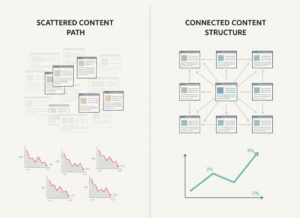
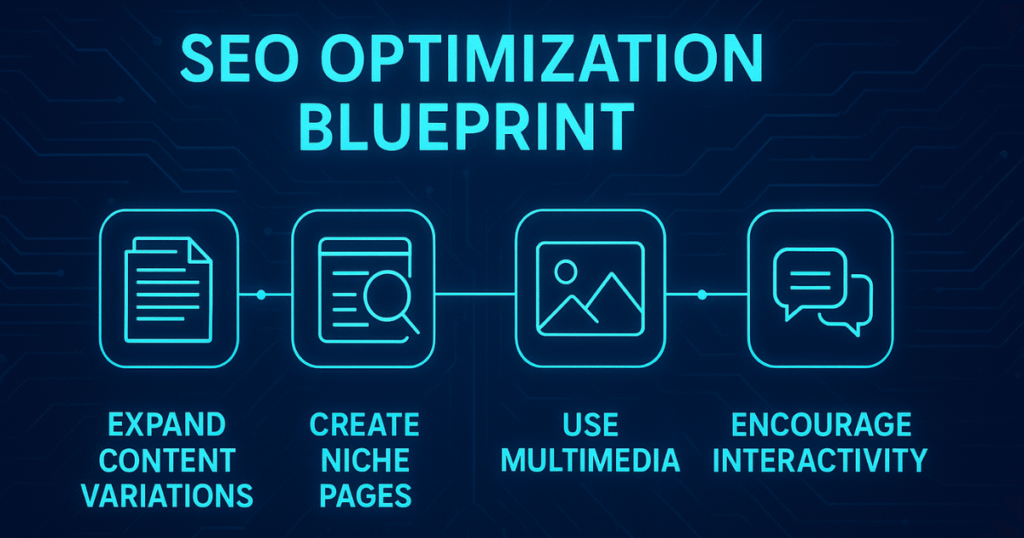
- Spread out your content: If your content is too narrow, add related variations, alternative phrasings, and broader supporting topics.
- Focus your content: If your content is too broad, create specific, niche pages that target well-defined queries.
The right approach depends on your site analysis. A content audit will tell you whether you need to expand or specialize.
Interactivity: AI Mode’s Hidden Advantage
Unlike normal search results, AI Mode is designed for interactive searches. When you ask a follow-up question or click suggested prompts, the AI continues the conversation and personalizes further.
This means your content should:
- Provide clear next steps or related reading suggestions.
- Use structured connections between articles so Google sees logical relationships.
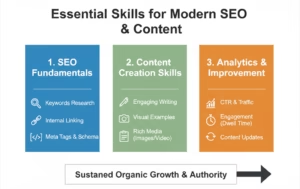
- Present information in multiple formats — text, images, videos, infographics — so AI has more elements to work with.
Formatting Matters for AI
AI doesn’t just read your text; it also interprets images, videos, and graphics on your page. But it’s not as smart as a human eye when reading fancy fonts or low-contrast colors.
If you’re using infographics:
- Keep font styles simple and legible
- Ensure high color contrast for readability
- Use clear labeling and relevant keywords in image alt text
This makes it easier for AI to extract and understand your visuals.
The SEO Takeaway
Query Fan-Out changes how Google finds and combines answers.
In normal search, the exact query determines the ranking pages.
In AI Mode, Google reshapes the query to get better answers — and that reshaping can completely change which sites appear.
If you want your content to show up in AI-generated answers:
- Anticipate related and alternate queries
- Offer both specific answers and broader context
- Use multimedia elements that AI can read and interpret
- Encourage interactive exploration within your site
The future of search is not just about ranking for one query, but being relevant for many versions of it.
FAQs
1. What is Query Fan-Out in Google Search?
It’s a process where Google’s AI breaks your query into multiple smaller or alternate questions to find better answers.
2. How is Query Fan-Out different from normal search?
Normal search uses your exact query, while AI Mode modifies it to be broader or narrower for improved results.
3. Why do AI Overview results differ from normal Google results?
Because AI Mode personalizes heavily and changes queries, leading to different ranking pages.
4. Can Query Fan-Out cause wrong answers?
Yes. Sometimes merging multiple sources causes AI to make mistakes, called “hallucinations.”
5. How can I optimize my site for AI Overview?
Create content for both broad and specific queries, use multimedia, and structure related topics clearly.
6. Does personalization affect SEO in AI Mode?
Absolutely. AI Mode tailors results based on user history, which can affect visibility.
7. Is Query Fan-Out used for all searches?
No, it’s mainly used in AI Overview and AI Mode, not in traditional search results.