Table of Contents
I’ve spent the last few years watching a predictable pattern play out across tech blogs. As soon as AI writing tools became mainstream, content volume exploded, but content quality quietly collapsed. Tutorials got longer but not clearer. Explanations sounded confident but said very little. And traffic numbers looked fine until they didn’t.
The problem was never AI itself. It was how people used it.
Most creators treated AI like a writer. Professionals treat it like a junior assistant that needs structure, constraints, and supervision. That difference is exactly where AI prompt systems for writing helpful tech content come in.
I’m not talking about clever one-line prompts or prompt marketplaces. I’m talking about reusable, intentional systems that consistently produce content people can actually use. If you care about long-term SEO, trust, and authority in the AI search era, this distinction matters more than any tool upgrade.
Why AI Prompt Systems Matter for Tech Content Today
Helpful tech content is harder to write than most people realize. You’re not just describing a topic. You’re translating complexity into clarity without dumbing it down. That’s something search engines increasingly measure indirectly through user behavior.
Here’s the uncomfortable truth: Google doesn’t need to “understand” your content perfectly if users don’t engage with it. Scroll depth, time on page, internal link clicks, and pogo-sticking tell the real story.
This is where generic AI output fails.
A single prompt might generate something that looks complete, but it usually misses:
- Context (who is this for?)
- Intent (why are they searching?)
- Practical depth (what do they actually need to do next?)
AI prompt systems for writing helpful tech content solve this by forcing consistency and intent alignment before the AI writes a single word. Instead of asking the model to “write an article,” you guide it through the same thinking process a human editor would follow.
In the current landscape of AI Overviews and entity-driven results, this approach isn’t optional. It’s foundational. I’ve covered this shift in detail in SEO for Tech Blogs in the AI Search Era, and the same principle applies here: structure beats volume every time.
What Is an AI Prompt System (Not Just a Prompt)?
A prompt is a request. A system is a process.
That distinction sounds subtle, but it changes everything.
An AI prompt system is a set of reusable instructions that define:
- Who the AI is writing as
- Who it’s writing for
- What “good” output looks like
- What must be included and what must be avoided
Think of it like an editorial checklist encoded into language the AI can follow. Instead of relying on luck, you create predictable outcomes.
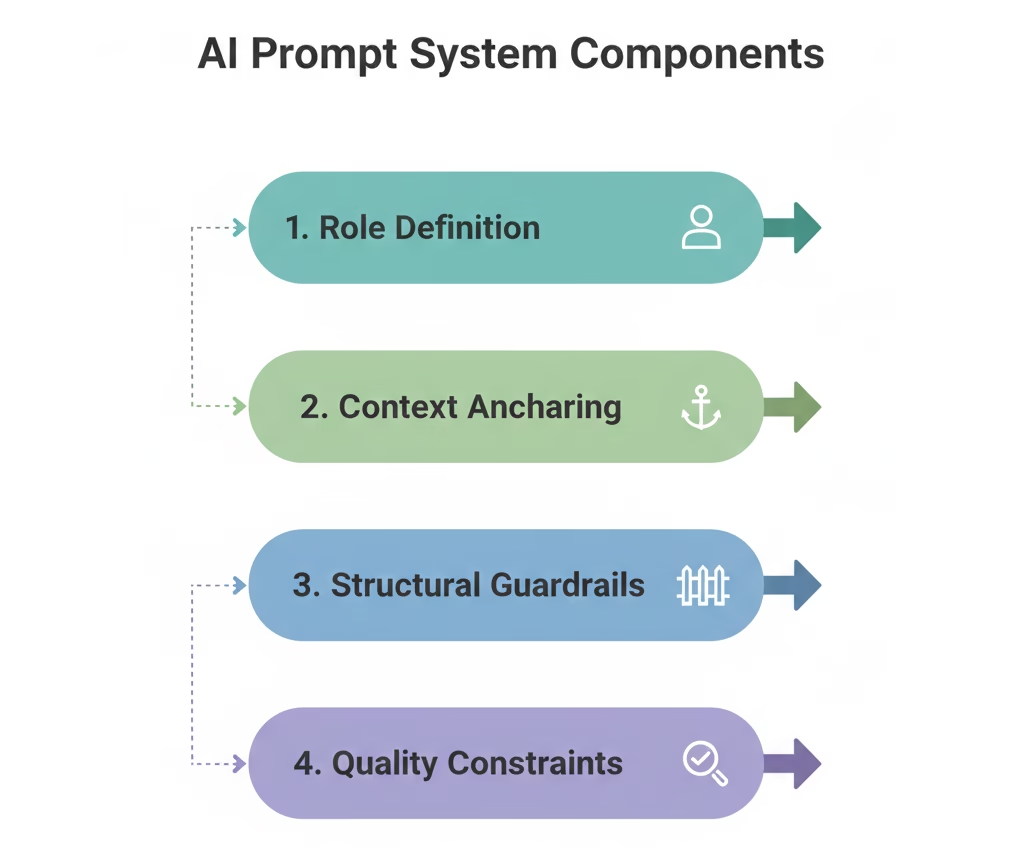
In practical terms, a real system usually includes:
- A role definition (for example, experienced practitioner vs generic explainer)
- Context anchoring (audience level, search intent, content goal)
- Structural rules (section depth, explanation requirements)
- Quality constraints (avoid fluff, include examples, explain trade-offs)
When I first moved from single prompts to systems, the difference was immediate. Articles needed less editing, explanations became more grounded, and most importantly, reader engagement improved. That’s not theoretical. You can see it in analytics.
If you’re serious about authority building, this approach aligns naturally with AI Prompt Frameworks for Writing High Trust Tech Content, because trust is built through consistency, not clever wording.
Core Elements of AI Prompt Systems for Writing Helpful Tech Content
Role and Expertise Framing
Most AI content sounds generic because the role is generic. “Act as an expert” isn’t enough. Expertise has a point of view, boundaries, and lived experience.
When you frame a role properly, you’re not asking the AI to pretend. You’re constraining its output. A senior SEO strategist explains things differently than a beginner-friendly tutor. A developer focuses on implementation details. A product analyst highlights trade-offs.
This matters because helpful tech content depends on perspective. Without it, explanations float above reality.
Context Anchoring
Context anchoring answers three questions before writing begins:
- Who is the reader?
- Why are they here?
- What should they understand or do after reading?
Skipping this step is why so much AI-written content feels misaligned. It might be accurate, but it’s not useful. For example, explaining a technical concept without knowing whether the reader is a blogger, developer, or marketer leads to wasted words and missing details.
Good AI prompt systems for writing helpful tech content inject this context explicitly. That’s how you avoid surface-level definitions and repetitive filler.
Structural Guardrails
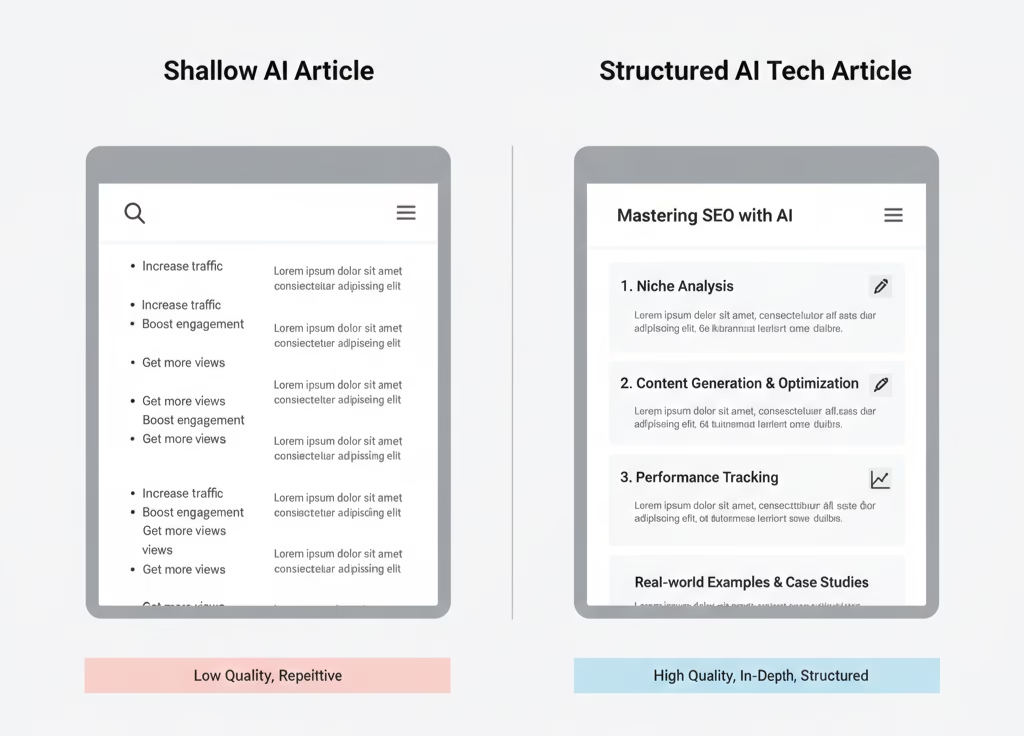
AI models default to symmetry. If you don’t force depth, every section gets the same shallow treatment.
Structural guardrails fix this by defining:
- Minimum section depth
- Required explanations for technical terms
- When examples are mandatory
This is especially important for tech tutorials and SEO content, where incomplete explanations can actively mislead readers. I’ve seen more ranking damage from “almost correct” AI content than from thin content.
Quality and Helpfulness Constraints
“Be helpful” means nothing to an AI unless you define it.
In my systems, helpfulness usually includes:
- Explaining why something matters, not just what it is
- Mentioning limitations or edge cases
- Avoiding exaggerated claims
- Using plain language for complex ideas
These constraints don’t limit creativity. They reduce noise. That’s why AI prompt systems for writing helpful tech content outperform free-form prompts in real-world publishing.
How AI Prompt Systems Improve SEO Performance (Practically)
SEO improvements from prompt systems are indirect but measurable.
When content is clearer and more intentional, users:
- Stay longer
- Scroll further
- Click internal links naturally
Search engines don’t need to “know” you used a system. They respond to outcomes. This is especially relevant in entity-based search, where clarity and topic coverage matter more than keyword density.
I’ve seen prompt-system-driven articles outperform manually written ones when:
- The internal linking was intentional
- The content addressed one search intent deeply
- Definitions and explanations were embedded naturally
This connects directly to Entity Based SEO With Practical Examples for Tech Websites and How AI Overviews Are Changing Keyword Intent Mapping in SEO. Prompt systems help you hit intent layers consistently, which reduces bounce rates and keyword cannibalization over time.
Common Mistakes When Using AI Prompt Systems
Overengineering Prompts
More rules don’t always mean better output. Overloaded prompts confuse models and dilute priorities.
Fix: Break systems into modular blocks. Role, context, structure, and quality should be reusable and adjustable independently.
Ignoring Search Intent Layers
If your system doesn’t differentiate between informational, comparison, and implementation intent, your content will feel unfocused.
Fix: Define intent explicitly before generation. This single step prevents most mismatches.
No Editorial Review Layer
AI systems reduce effort, not responsibility. Publishing without review is how subtle inaccuracies slip through.
Fix: Always apply a human checklist. Accuracy, clarity, and redundancy checks take minutes and save months of SEO damage.
Treating AI as the Writer
This is the core mindset error. AI should assist thinking, not replace it.
Fix: Design systems that guide output, then refine like an editor. That’s how professionals use AI sustainably.
Step-by-Step: Building Your Own AI Prompt System for Tech Content
This is where most people overthink things. You don’t need a complex framework or dozens of rules. You need a repeatable workflow that mirrors how good tech content is actually written.
Here’s the exact structure I use and recommend.
Step 1: Define Content Purpose and Reader Skill Level
Before you touch AI, decide two things:
- What problem this page solves
- Who it’s written for
“Everyone” is not an audience. A beginner needs clarity and definitions. An intermediate reader needs connections and examples. An advanced reader wants nuance and trade-offs.
If you skip this step, the AI will default to generic explanations that satisfy no one. Prompt systems work because they lock the reader profile in place before writing starts.
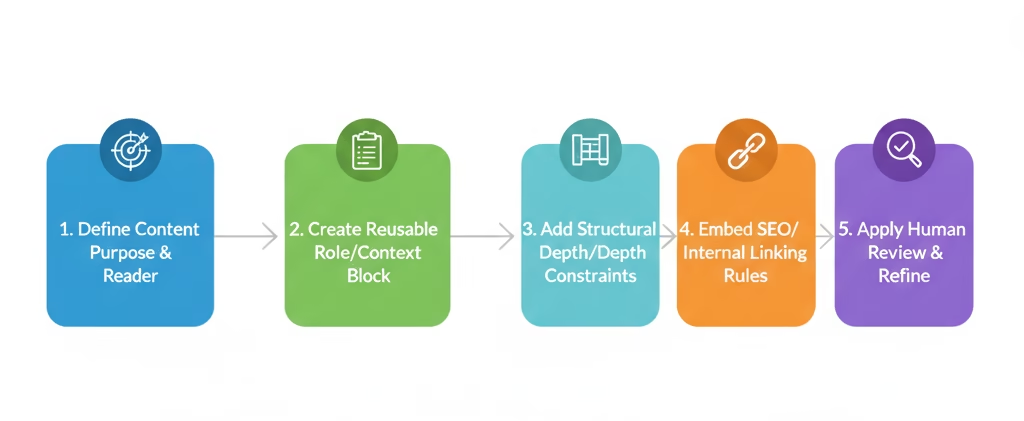
Step 2: Create a Reusable Role and Context Block
This block stays mostly the same across articles. It defines:
- The perspective (practitioner, strategist, implementer)
- The tone (calm, factual, non-promotional)
- The responsibility (accuracy over hype)
This is where consistency comes from. When every article is generated from the same role definition, your site starts to feel cohesive. That cohesion matters for trust and brand signals, even if Google never explicitly measures it.
Step 3: Add Structural and Depth Constraints
This is the most important part of AI prompt systems for writing helpful tech content.
You’re not telling the AI what to say. You’re telling it how deeply it must explain.
Practical constraints include:
- Minimum word depth per section
- Mandatory explanation of technical terms in-context
- No single-sentence sections
- Clear separation between concepts and steps
These rules prevent thin content without forcing verbosity. They also reduce hallucination because the model has to reason through explanations instead of summarizing loosely.
Step 4: Embed SEO and Internal Linking Rules
SEO rules should guide, not dominate.
I recommend defining:
- Primary keyword usage expectations (natural, not forced)
- Where internal links should appear (contextual explanations, not random mentions)
- Anchor text rules (descriptive, not exact-match spam)
This aligns perfectly with Internal Linking for Topical Authority. Prompt systems make internal linking intentional instead of an afterthought.
Step 5: Apply a Human Review Checklist
No system replaces judgment.
Before publishing, review for:
- Accuracy (especially in technical steps)
- Redundancy (AI loves repetition)
- Clarity (are explanations actually useful?)
- Alignment with search intent
This review layer is what separates professional AI-assisted content from disposable content. It’s also what keeps your site AdSense-safe long term.
Real Use Cases Where AI Prompt Systems Work Best
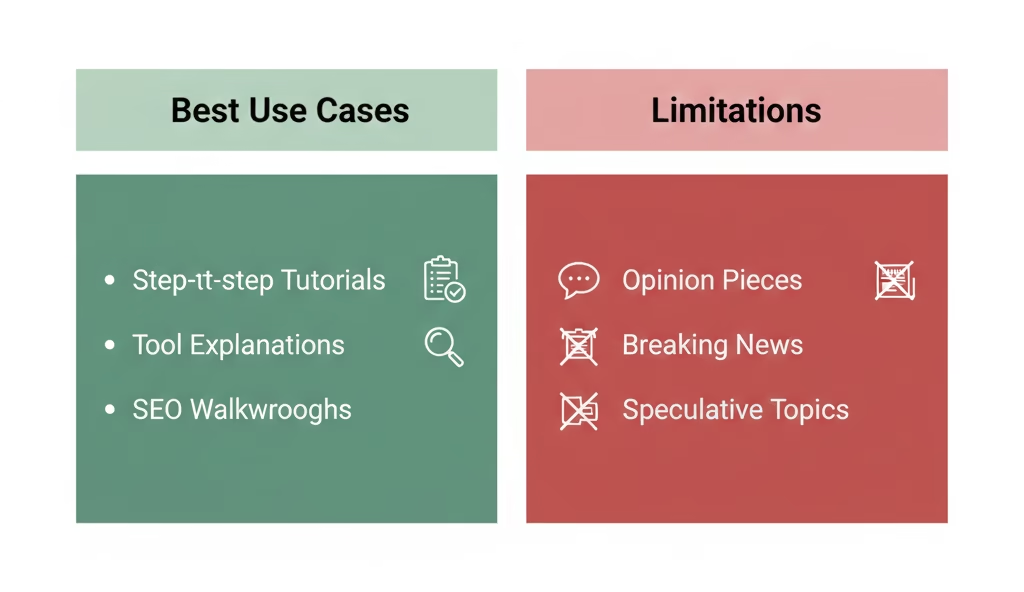
AI prompt systems shine when structure and clarity matter more than opinion.
They work exceptionally well for:
- Step-by-step tutorials
- Tool explanations and onboarding guides
- SEO and analytics walkthroughs
- Evergreen educational content
Where they struggle is just as important to understand.
They’re weaker for:
- Strong opinion pieces
- Breaking news
- Experimental or speculative topics
This is why I often remind clients that AI is not a replacement for thinking. It’s a force multiplier for structured knowledge. If you want to understand where automation stops making sense, I’ve broken that down in AI vs Human SEO Where Automation Actually Works.
FAQs
Are AI prompt systems better than hiring writers?
They’re different. Prompt systems reduce production cost and improve consistency, but they still need editorial oversight. They’re best used alongside human judgment, not instead of it.
How long does it take to build a usable system?
A basic system can be built in a few hours. A refined one evolves over weeks as you adjust based on output quality and reader behavior.
Can AI prompt systems help with AdSense approval?
Indirectly, yes. Clear structure, helpful explanations, and reduced fluff align with quality signals. This ties closely to SEO Signals That Help With Google AdSense Approval.
Do these systems work for non-tech niches?
Yes, but tech content benefits the most because it relies heavily on clarity, accuracy, and step-by-step reasoning.
How often should prompt systems be updated?
Whenever your content goals change or when search behavior shifts. Treat them as living documents.
Can beginners use AI prompt systems effectively?
Yes, but only if they respect the system. Skipping steps defeats the purpose.
Future Considerations for AI Prompt Systems
AI search interfaces will continue to evolve, but one thing is unlikely to change: helpfulness will remain behavior-driven.
Prompt systems that:
- Encourage depth
- Reduce ambiguity
- Align with intent
will age better than trendy hacks or prompt libraries. Autonomous agents may handle more tasks, but human oversight will matter more, not less, as stakes increase.
Conclusion
If there’s one thing to remember, it’s this: prompts are disposable, systems are assets.
AI prompt systems for writing helpful tech content give you leverage. They turn AI from a novelty into infrastructure. And infrastructure is what scales authority without sacrificing quality. Build the system once. Improve it slowly. Let consistency do the heavy lifting. That’s how you win in the long run.