Table of Contents
I have been doing keyword research long before AI tools entered the SEO workflow. Back then, it was spreadsheets, Search Console exports, and a lot of manual SERP reading. Slow, but grounded in reality. When AI tools started showing up, many people assumed keyword research was suddenly solved. It wasn’t. It just shifted the work.
Today, AI tools for keyword research and content gap analysis are powerful, but only if you understand what they are actually doing behind the scenes. Used blindly, they create false confidence. Used correctly, they save time, surface hidden opportunities, and help you build topical authority faster than manual methods ever could.
This article is not a tool hype piece. I am not here to convince you that AI replaces SEO thinking. It doesn’t. What it does is compress analysis time and expand pattern detection, assuming you know how to validate and interpret the output.
Why AI Changed Keyword Research and Gap Analysis
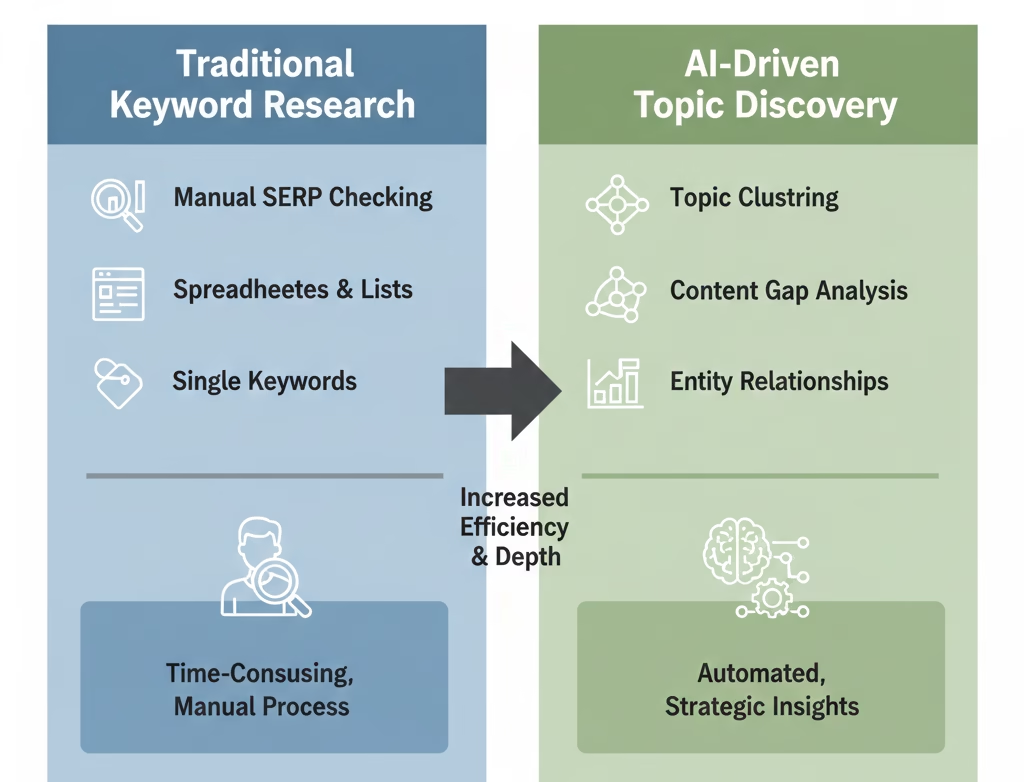
Traditional keyword research was volume-first. You looked for numbers, competition, and maybe SERP features. That model worked when Google was more literal and websites were smaller. It breaks down in the AI search era because rankings are no longer driven by isolated keywords. They are driven by topic coverage, entity relationships, and intent satisfaction.
AI tools changed the workflow by shifting focus from single keywords to clusters, themes, and semantic relevance. Instead of asking “what keyword should I target,” the better question now is “what topic am I under-serving compared to competitors.” That is where content gap analysis becomes critical.
Content gap analysis, in practical terms, means identifying:
- Topics competitors cover that you do not
- Sub-intents your content ignores
- Supporting pages missing from your internal structure
AI excels at scanning large datasets and surfacing these patterns quickly. But it has a blind spot: it does not understand your business model, monetization strategy, or audience depth. That part remains your job.
What “AI Tools for Keyword Research” Actually Are
Most people misunderstand this category. These tools are not magical keyword generators. They are systems that combine machine learning with existing SEO datasets such as SERPs, crawled pages, click data, and language models.
In simple terms, AI tools for keyword research do three main things:
- Extract entities and topics from existing content
- Group keywords by semantic similarity instead of exact match
- Predict intent relationships based on SERP patterns
This is very different from autocomplete-based keyword suggestions. When an AI tool simply generates phrases that “sound right,” it becomes dangerous. Plausible does not mean rankable.
Good tools ground their output in real search data and competitor analysis. Bad tools hallucinate structure without verification.
Core AI Tools Used for Keyword Research and Gap Analysis
Below are the tools I see consistently used in real SEO workflows. Each has strengths and clear limitations.
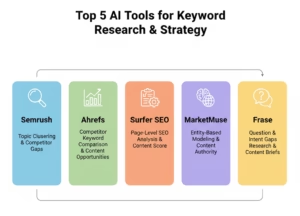
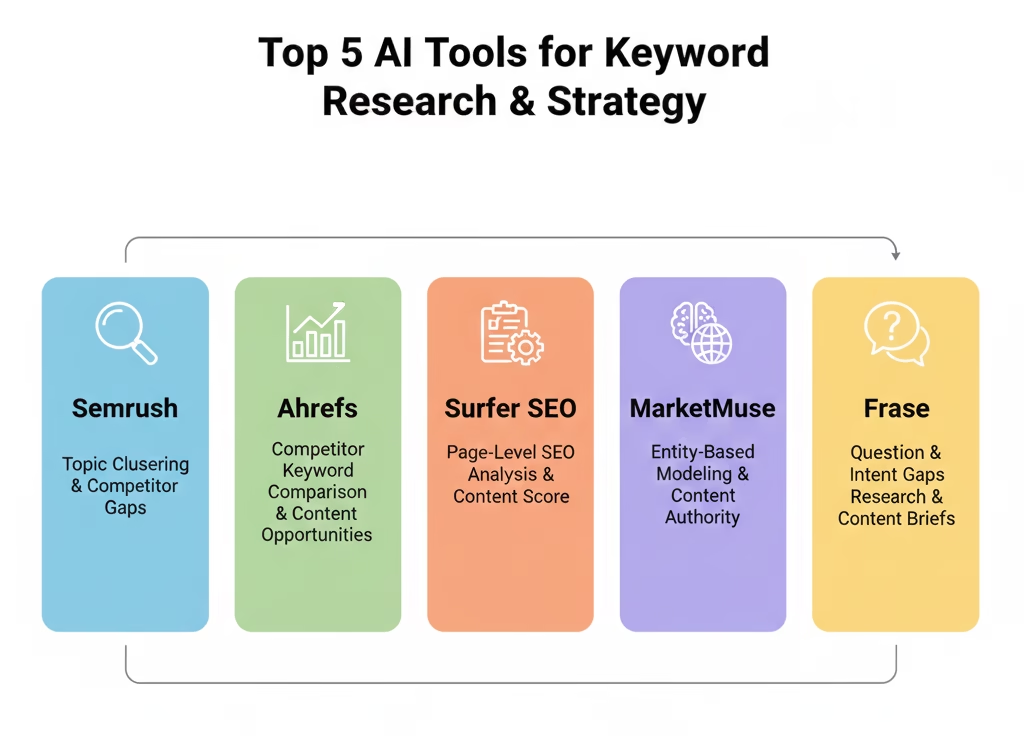
Semrush (AI Keyword and Topic Tools)
Semrush is not new, but its AI-assisted layers changed how keyword research is performed. Its keyword tools combine classic metrics with intent classification and topic grouping.
Where Semrush helps:
- Keyword clustering based on SERP similarity
- Identifying missing keywords across competitors
- Mapping keywords to informational, commercial, or navigational intent
Its Keyword Gap and Topic Research features are often used together for content gap analysis. The limitation is that Semrush still relies heavily on keyword-level data. It is excellent for validation, but weaker at deep entity analysis.
Use it to confirm opportunities, not to discover strategy.
Ahrefs (Content Gap and AI Keyword Expansion)
Ahrefs remains one of the strongest tools for competitor-driven keyword research. Its Content Gap tool identifies keywords competitors rank for that your site does not.
Where Ahrefs stands out:
- Strong backlink-contextual keyword discovery
- Reliable competitor comparison
- Clean data presentation for manual review
Ahrefs recently added AI-based keyword expansion, but its real value is still in grounded data. I use Ahrefs output as a reality check against AI-generated clusters.
Its weakness is topic abstraction. It tells you what exists, not how to structure it.
Surfer SEO (AI-Based Content Gap Mapping)
Surfer is often misunderstood as just a content optimizer. In reality, it functions as a SERP pattern analyzer.
For keyword research and gap analysis, Surfer:
- Analyzes top-ranking pages for shared terms and entities
- Surfaces missing sections and subtopics
- Helps align content depth with SERP expectations
Surfer’s strength is page-level gap analysis, not site-wide strategy. It should be used after you decide what topic to target, not before.
Blindly following Surfer scores is a common mistake. The tool reflects the SERP, not quality.
MarketMuse (Entity-Driven Topic Modeling)
MarketMuse is one of the few tools that genuinely focuses on entity-based SEO. Instead of keywords alone, it builds topic models based on authoritative content across the web.
What MarketMuse does well:
- Identifies topic authority gaps
- Recommends supporting subtopics
- Helps prioritize content based on authority potential
This tool is slower and more strategic. It is not for quick wins. It shines when building long-term topical authority for tech and AI blogs.
Its downside is cost and learning curve. Beginners often misuse it because they expect keyword lists instead of topic frameworks.
Frase (AI Content Gap and Question Discovery)
Frase focuses on intent and question-based research. It analyzes SERPs to identify what users are actually asking around a topic.
Frase helps with:
- Discovering question-based gaps
- Aligning content with informational intent
- Improving coverage for featured snippets
It is not a primary keyword research tool. Think of Frase as a refinement layer that helps close intent gaps within existing topics.
Why Tools Alone Are Not Enough
Here is the uncomfortable truth: AI tools do not know which gaps matter. They surface patterns, not priorities.
A real content gap is one that:
- Matches search intent
- Aligns with your monetization model
- Fits within your topical authority
AI tools for keyword research and content gap analysis only solve the first part. The rest requires human judgment, SERP reading, and internal data from Search Console.
In the next section, I break down how to actually use these tools step by step, including validation workflows, prioritization logic, and failure points most guides either ignore or do not understand.
Step-by-Step: Using AI Tools for Keyword Research and Content Gap Analysis
This is where most people fail. They open a tool, export a list, and start writing. That approach produces bloated sites, keyword overlap, and weak rankings. A proper workflow is slower, but it works.
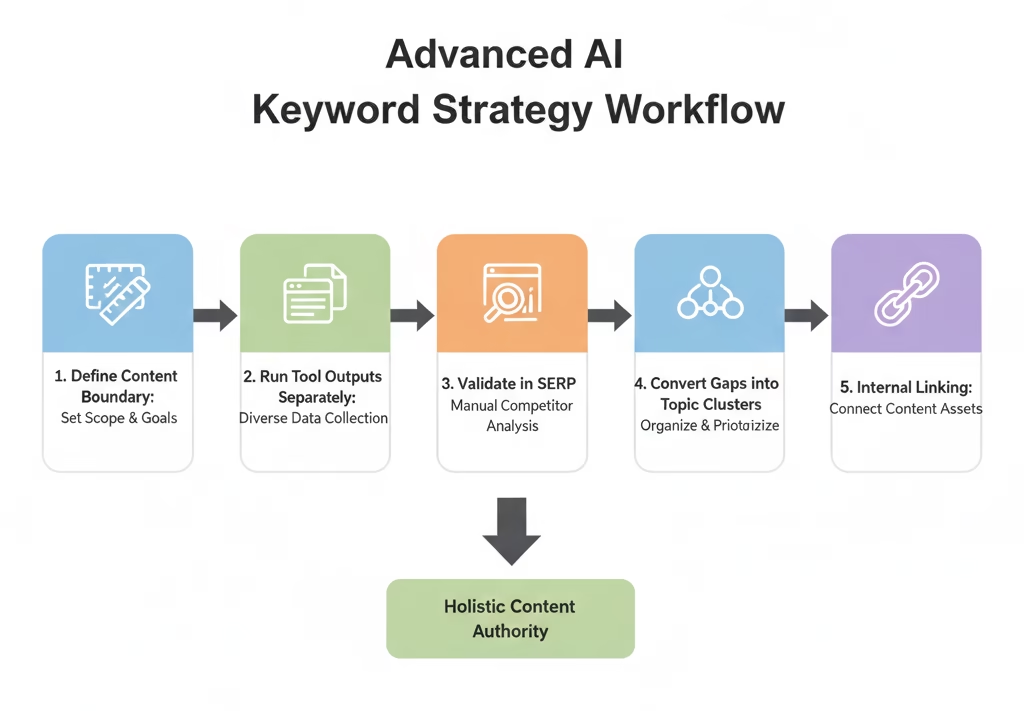
Step 1: Define the Content Boundary First
Before touching any AI tool, you must define what the analysis includes and excludes. This sounds basic, but skipping it destroys accuracy.
Ask yourself:
- Is this analysis for a single article, a topic cluster, or an entire silo?
- Are you comparing against direct competitors or authority sites only?
- Are transactional pages included or excluded?
AI tools do not know your scope unless you force it. Without boundaries, they blend unrelated intents and inflate gaps that do not matter.
Step 2: Run Tool Outputs Separately, Not Combined
Each AI tool sees the web differently. Combining outputs too early creates noise.
A practical order that works:
- Use Ahrefs or Semrush for baseline competitor gaps
- Use MarketMuse for topic-level authority gaps
- Use Frase or Surfer to refine intent and subtopics
Keep these outputs separate at first. Only merge them after manual review. This preserves signal clarity and avoids duplication.
Step 3: Validate Everything in the SERP
This step cannot be automated. Anyone telling you otherwise is lying.
For each major gap:
- Search it manually
- Inspect the top 5–10 results
- Note content type, depth, and format
If AI suggests a topic but the SERP shows mismatched intent, discard it. Ranking comes from alignment, not coverage volume.
This is where experience beats tools.
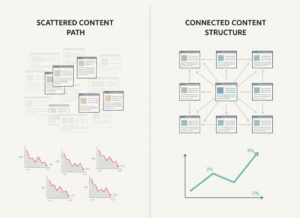
Step 4: Convert Gaps Into Topic Clusters
A keyword gap is useless on its own. It becomes valuable only when mapped into structure.
You should end up with:
- One primary page (pillar or main article)
- Multiple supporting articles
- Clear internal linking paths
This step directly feeds into Internal Linking for Topical Authority and prevents cannibalization before it happens.
Common Mistakes I See Constantly
Mistake 1: Treating AI Output as Strategy
AI tools generate data, not decisions. When people publish directly from AI recommendations, content quality drops fast.
Fix: Force a human checkpoint. If you cannot explain why a topic matters in plain language, do not publish it.
Mistake 2: Over-Expanding Topic Clusters
More content does not equal more authority. Excess pages dilute crawl budget and confuse Google.
Fix: Prioritize intent depth over topic width. This aligns with Why Programmatic SEO Fails Without Proper Crawl Budget Control.
Mistake 3: Ignoring Monetization and Audience Fit
Not every keyword gap is worth filling. Many AI tools surface informational topics with zero revenue alignment.
Fix: Tag gaps by intent and earning potential before content creation.
How AI Keyword Research Fits Into a Real SEO System
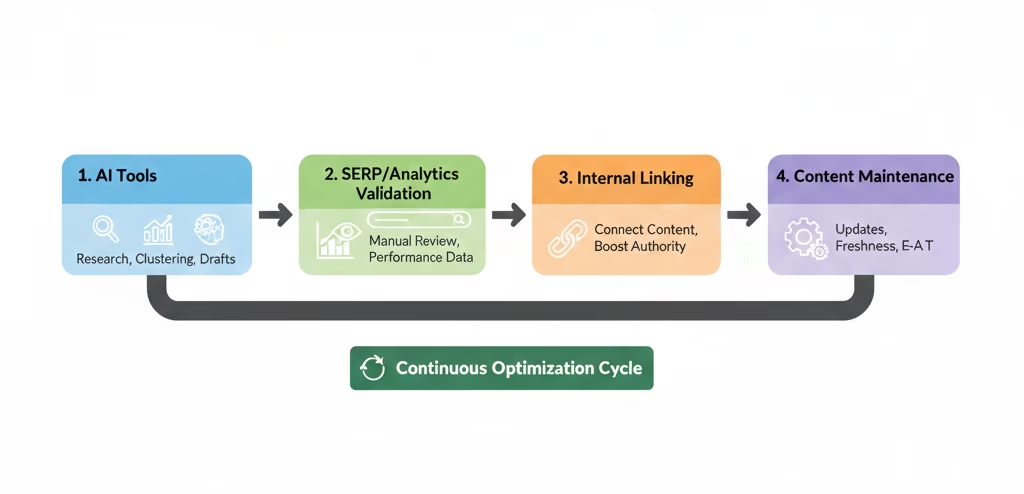
AI tools for keyword research and content gap analysis should sit inside a larger system, not operate in isolation.
In a functional SEO workflow:
- AI tools surface opportunities
- Search Console validates demand
- Internal linking amplifies authority
- Content updates maintain relevance
This ties directly into SEO for Tech Blogs in the AI Search Era and AI vs Human SEO Where Automation Actually Works.
Choosing the Right AI Tool (Without Feature Obsession)
Most people choose tools based on dashboards. That is backward.
What actually matters:
- Data sources and freshness
- Ability to export and audit
- Transparency in recommendations
Red flags include vague scoring systems and one-click content suggestions. If a tool hides its logic, do not trust it.
FAQ: Real Questions From Real Site Owners
Are AI tools reliable for keyword research in competitive niches?
Yes, but only as discovery aids. Final decisions still require SERP validation.
Can AI tools replace traditional SEO tools entirely?
No. They extend them. They do not replace grounded data.
How often should content gap analysis be done?
For active sites, quarterly is realistic. Monthly is usually overkill.
Do AI tools work for new websites?
They work for research, not validation. New sites still need patience.
Is AI-based keyword research safe for AdSense sites?
Yes, if content is original, intent-aligned, and not mass-produced.
Future Considerations (Without Hype)
AI Overviews and entity-based ranking will continue reducing the value of raw keyword volume. Coverage, structure, and trust signals will matter more.
The SEOs who win will not be those with better tools, but those who know when to ignore them.
Conclusion
AI tools for keyword research and content gap analysis are powerful amplifiers. They reward clarity and punish laziness.
If you treat them as thinking machines, your site will drift. If you treat them as analytical assistants, they will save you years of trial and error.
The difference is not the tool. It is the operator.