Table of Contents
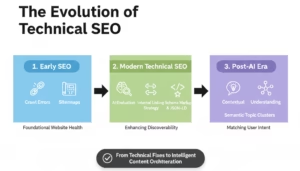
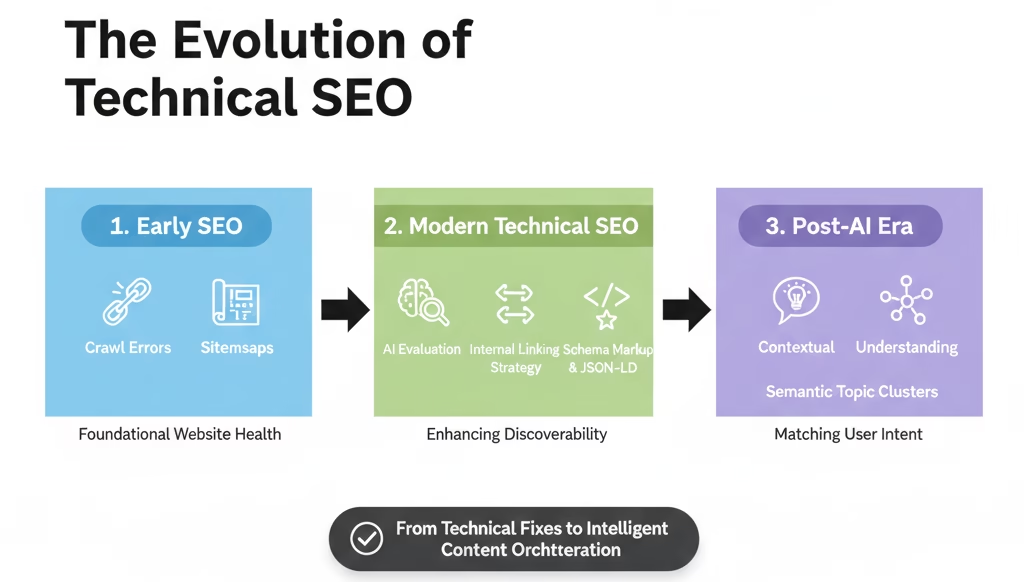
I have been working with technical SEO long enough to remember when ranking improvements came from fixing a few crawl errors and submitting an XML sitemap. Back then, search engines behaved like simple machines. If a page loaded, had links, and contained keywords, it often performed well. That world no longer exists.
In 2026, search optimization is no longer about isolated fixes. It is about building a system that AI driven search engines can understand, trust, and reuse across many contexts. I have seen technically perfect sites struggle because they lacked clarity. I have also seen simple sites outperform larger competitors because their structure made sense to both users and machines.
This guide exists because many people are still using outdated technical SEO checklists. They optimize tools instead of outcomes. They fix errors without understanding how Google AI systems evaluate websites as connected knowledge environments.
If you have ever improved page speed, cleaned technical warnings, and still watched traffic slowly decline, this guide is written for you. My goal here is not to overwhelm you. It is to help you see technical SEO as a long term foundation, not a one time task.
By the end of this guide, you will understand how AI driven search optimization actually works in practice and how to build a site that remains stable even as algorithms continue to evolve.
Understanding Technical SEO in a Post AI Search Era
Technical SEO has not disappeared. It has matured. The fundamentals still matter, but how they are evaluated has changed completely.
What Technical SEO Actually Covers Today
When people hear technical SEO, they often think only about crawl errors or page speed. In reality, modern technical SEO covers the entire infrastructure that supports how content is discovered, processed, and trusted.
Today, technical SEO includes
• Crawling efficiency and how bots move through your site
• Indexing control and deciding which pages deserve visibility
• Rendering clarity so content is visible without friction
• Site architecture that shows topic relationships
• Performance signals tied to real user experience
• Trust and security indicators that reduce risk signals
Each of these areas contributes to how AI based ranking systems build confidence in your site. Search engines no longer look at pages in isolation. They evaluate how everything connects.
One area that is often ignored is how servers communicate information. Headers quietly tell search engines how to handle content, caching, and redirects. When these signals are inconsistent, AI systems struggle to interpret intent. This is why understanding how server responses influence crawl and indexing behavior matters, especially when scaling content. A deeper explanation of this can be found when exploring server communication signals that guide search engines, which aligns closely with the concepts covered in HTTP header optimization for SEO foundations.
Technical SEO today is less about fixing warnings and more about reducing ambiguity.
Why Traditional Technical SEO Checklists Are No Longer Enough
For years, SEO education trained people to follow lists. Fix broken links. Compress images. Improve page speed. These actions still help, but they no longer guarantee stability.
AI driven search systems evaluate patterns. They ask
Does this site demonstrate consistent expertise
Do pages support each other contextually
Does the structure reinforce intent
I have audited many sites that passed every technical audit tool and still failed to grow. The problem was not errors. The problem was lack of cohesion.
AI systems learn from how users interact with content over time. When technical elements fail to support understanding, even small issues compound. This is why algorithm shifts driven by artificial intelligence have forced SEOs to rethink how technical signals are prioritized. Understanding how AI has reshaped ranking logic in recent years is essential, especially when reviewing the changes explained in recent AI focused SEO shifts shaping modern search behavior.
Technical SEO now supports interpretability, not just accessibility.
How Google AI Systems Interpret Technical Signals
To optimize for AI driven search, you must first understand how machines evaluate information. This does not require deep engineering knowledge. It requires clarity.
Google AI Mode and Its Impact on SEO Decisions
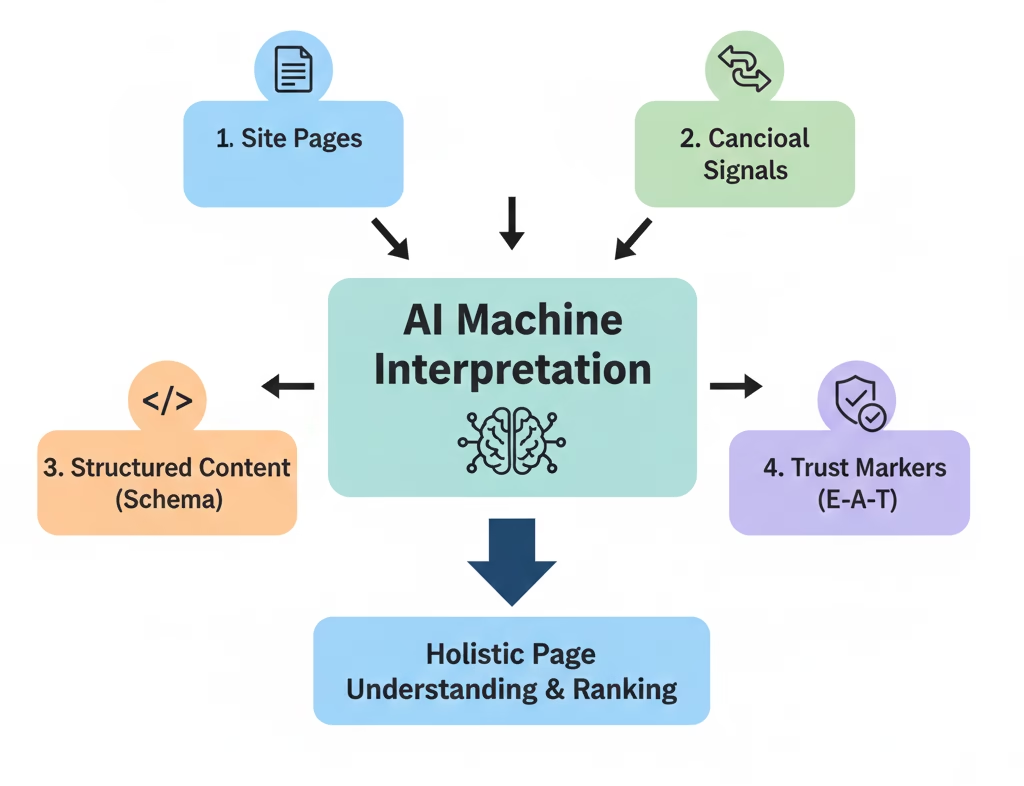
Google AI Mode represents a shift in how results are generated and presented. Instead of ranking ten blue links based on isolated relevance, AI systems synthesize information across many sources.
In simple terms, Google AI Mode looks for
• Clear topical authority
• Consistent technical signals
• Reliable source identification
When technical SEO sends mixed signals, AI confidence drops. For example, inconsistent canonical usage or unclear site structure makes it harder for systems to decide which pages represent your expertise.
This is why understanding how AI driven result generation affects visibility and trust has become critical. The broader implications of this shift are well explained when studying how AI based search presentation changes SEO and business outcomes, which aligns with the concepts discussed in AI influenced search environments and ranking interpretation.
Technical clarity reduces decision friction for machines.
Query Fan Out and Multi Intent Evaluation
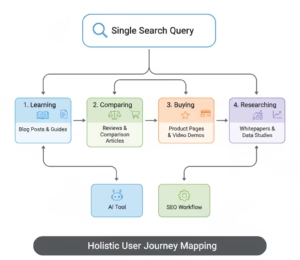
One of the biggest changes in AI search is how queries are interpreted. Instead of matching a single intent, AI systems break queries into multiple possible meanings.
This process, often called query fan out, allows search engines to test different interpretations of a query against known content patterns. A single search may trigger evaluations related to education, comparison, or problem solving.
From a technical perspective, this means your site must support contextual depth. Pages should not exist in isolation. They should connect logically to related topics.
When internal links reinforce relevance, AI systems understand scope more clearly. This is where internal linking systems that guide topic relationships become essential. Understanding this concept aligns naturally with how internal linking strengthens semantic connections across content, a principle expanded further in strategic internal linking for scalable SEO growth.
Crawling Indexing and Rendering Optimization in 2026
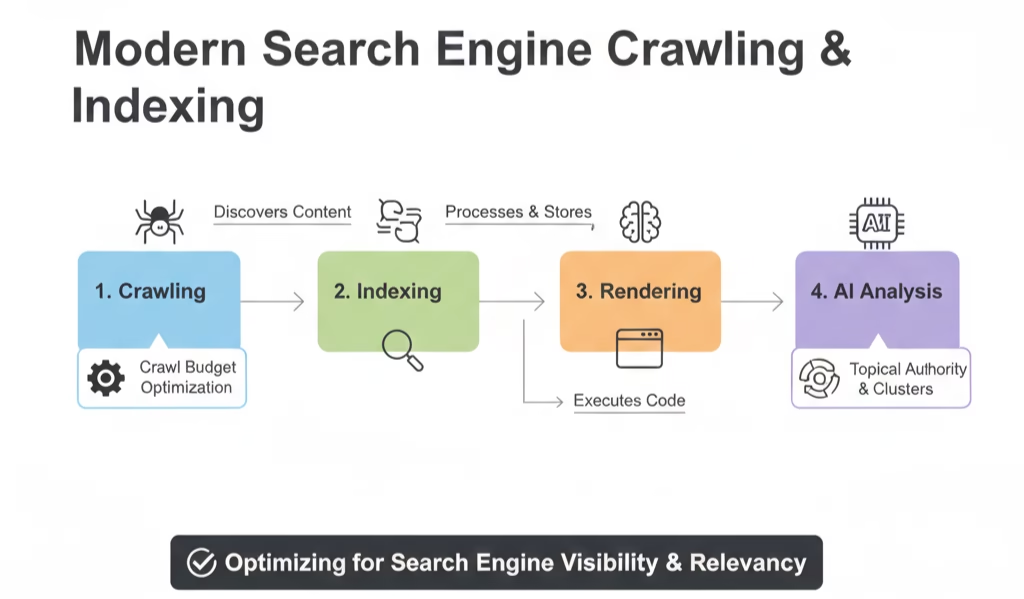
Even in an AI driven world, crawling and indexing remain foundational. What has changed is how mistakes are interpreted.
Crawl Budget Management for Growing Content Sites
Crawl budget refers to how often search engines visit your pages. While small sites rarely hit limits, growing sites often waste crawl attention on low value pages.
Common causes include
• Duplicate URLs
• Filter parameters
• Thin tag pages
• Weak internal linking
When crawl paths are inefficient, AI systems receive fragmented signals. Over time, this reduces confidence in content freshness and relevance.
This is why internal linking as a navigation and prioritization system matters more than ever. When links guide crawlers naturally, indexing becomes more selective and accurate. The broader role of internal linking as a structural backbone is deeply connected to how internal connections support digital growth systems, which is explained well through internal linking as a core SEO foundation.
Site Architecture That Supports AI Understanding
As sites grow, structure becomes more important than any single optimization. I have seen strong content fail simply because it was buried under poor architecture. In an AI driven search environment, site structure is not navigation only. It is how machines learn what your site represents.
Topic Clusters and Contextual Hierarchies
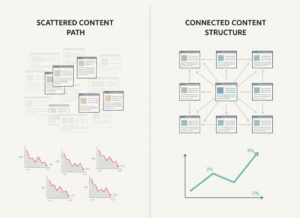
AI systems learn by observing relationships. When pages are connected randomly, meaning is lost. When pages are grouped intentionally, understanding improves.
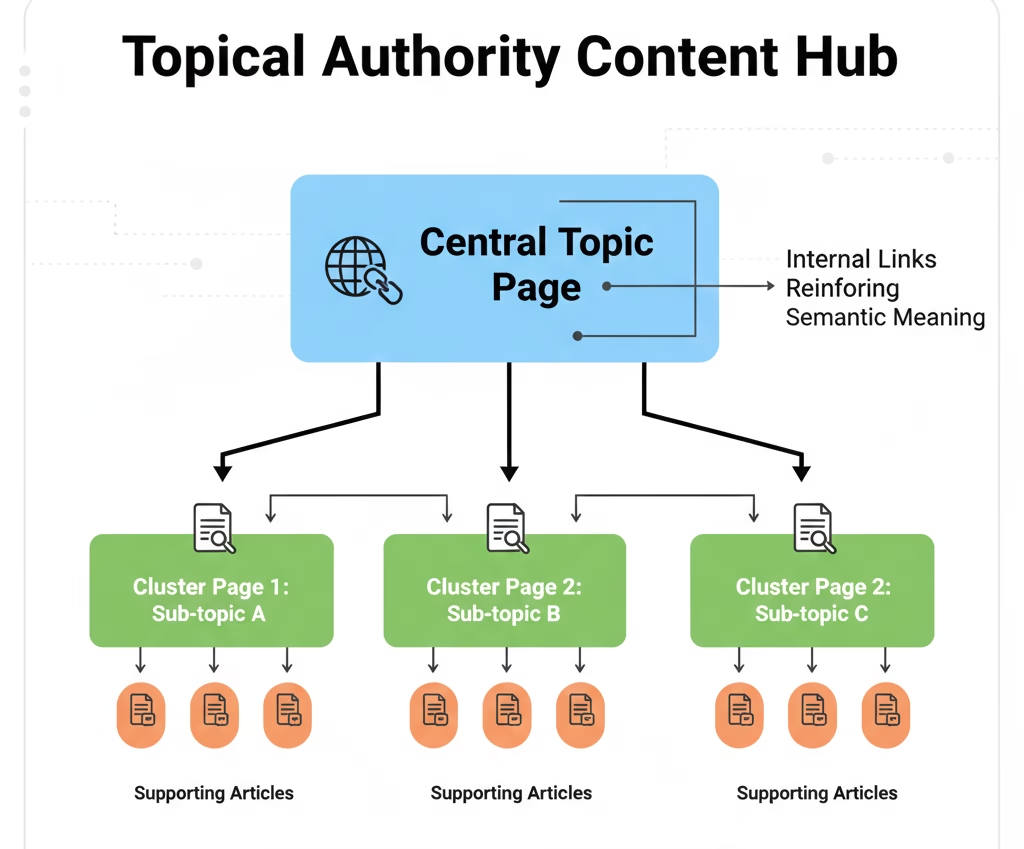
This is where topic clusters matter. A topic cluster is a group of related pages that support a central theme. The main page introduces the topic broadly, while supporting pages explore specific angles in depth. Together, they create contextual authority.
From experience, clustered sites are easier to scale. New content fits naturally instead of floating without purpose. AI systems also benefit because they can trace relevance across multiple pages instead of guessing intent from one URL.
This approach mirrors how content driven systems are built in structured digital marketing environments, especially when SEO and content strategy work together. The relationship between architecture and growth becomes clear when reviewing how content driven digital strategies rely on strong SEO structure, which aligns closely with principles explained in content focused digital marketing systems for long term traffic growth.
Good architecture reduces confusion for users and machines at the same time.
URL Structure and Logical Depth
URLs still matter, not because of keywords, but because they signal hierarchy. Clean URLs show where a page belongs.
A logical structure
• Keeps important pages closer to the root
• Avoids unnecessary folders
• Reflects topic relationships clearly
When URLs become deep or inconsistent, AI systems struggle to map relevance. This often happens after years of publishing without a plan. Fixing it later becomes risky.
This is why planning architecture early saves years of cleanup. When changes are unavoidable, careful execution is critical. Understanding how to restructure URLs and content safely becomes important, especially during redesigns or migrations. These principles align closely with safe website migration practices that protect SEO value over time.
Structure should grow with intent, not accident.
Internal Linking as a Semantic Signal
Internal links are more than pathways. They are signals of meaning.
When one page links to another naturally, it tells AI systems that these topics are related. When many pages point to a central resource, it reinforces authority.
Poor internal linking creates isolated content. Even strong pages underperform when they are disconnected.
I consistently see better performance when internal links are
• Contextual
• Descriptive
• Limited to relevance
This is why internal linking is increasingly viewed as a growth lever, not a cleanup task. Its role in building topical clarity becomes obvious when studying how internal linking directly influences digital growth systems, which connects naturally with internal linking strategies that compound SEO value over time.
Performance Optimization for AI Driven Rankings
Speed has always mattered, but now it matters for a different reason. Performance influences trust and satisfaction signals, not just rankings.
Core Web Vitals and Real User Signals
Core Web Vitals measure how real users experience your site. These metrics reflect loading speed, visual stability, and responsiveness.
What many people miss is that AI systems do not look at these numbers in isolation. They evaluate patterns across many users.
A fast page that frustrates users still sends negative signals. A slightly slower page that delivers clarity often performs better long term.
This is why performance optimization should focus on experience consistency, not chasing perfect scores. When users stay, scroll, and engage, AI systems learn that the page delivers value.
Server Level Optimization and Hosting Choices
Hosting quality quietly affects everything. Server response time influences crawl efficiency, rendering, and user experience.
I have seen dramatic improvements simply by moving sites to better server environments. Especially for WordPress, server level optimization often produces more impact than theme tweaks.
This is where understanding how server configurations influence speed and stability becomes useful. Practical guidance on this topic connects well with server side optimization strategies for LiteSpeed environments, which demonstrate how infrastructure choices support SEO performance in real conditions.
Structured Data and Schema for AI Interpretation
AI systems rely on context. Schema markup provides that context explicitly.
Why Schema Matters More in AI Search
Schema helps machines understand what a page represents. It does not guarantee rankings, but it reduces uncertainty.
For example, schema clarifies
• What type of content exists
• Who created it
• What entity it represents
When schema is missing or incorrect, AI systems must infer meaning. Inference increases error.
In an AI driven environment, clarity wins.
Organization Schema and Trust Signals
Organization schema plays a growing role in trust evaluation. It helps connect your site to a real entity.
When implemented correctly, it supports
• Brand recognition
• Content attribution
• Knowledge graph inclusion
Recent changes have increased the importance of accurate organization data. Understanding how updated organization schema standards affect visibility and trust aligns closely with recent organization schema upgrades that improve AI interpretation.
Implementing Schema Safely in WordPress
Schema should be implemented carefully. Overuse creates noise. Incorrect markup creates confusion.
For WordPress sites, structured tools simplify implementation without coding. The key is restraint. Add schema where it clarifies meaning.
Practical approaches to this are well demonstrated when reviewing safe schema implementation methods using modern SEO plugins, which connects naturally with structured data management in WordPress environments using Rank Math.
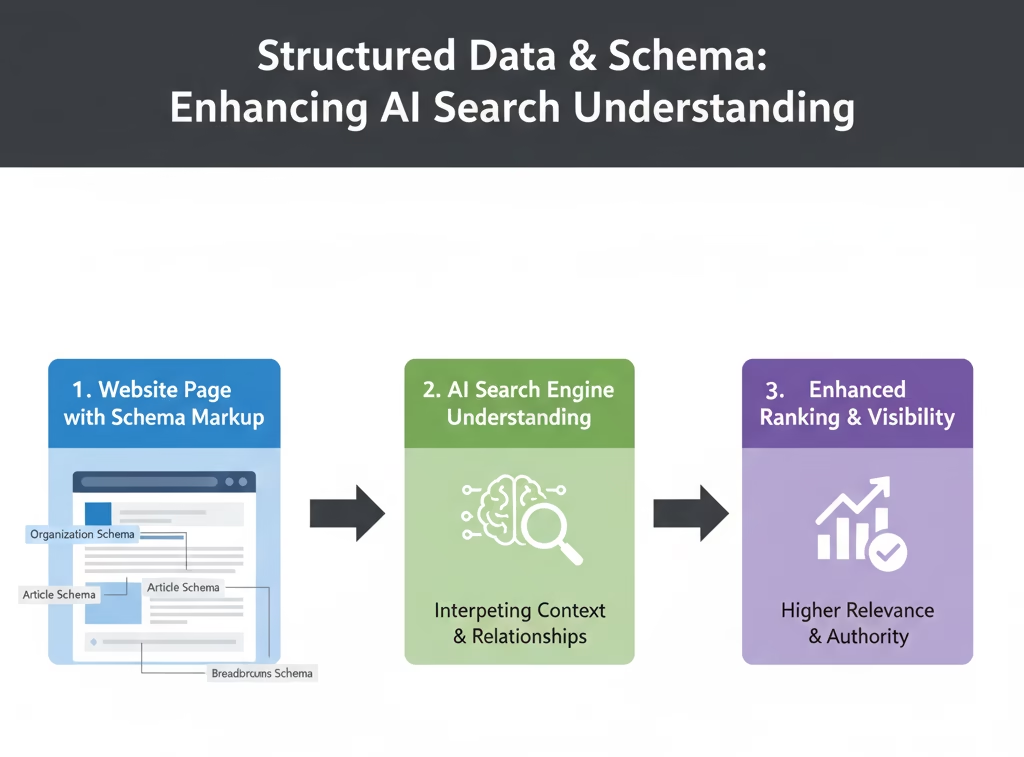
Image and Media Optimization for AI Search
Images and media assets are no longer decorative elements. In modern search systems, they act as independent information sources. I have seen pages gain visibility purely because their images were better structured and easier for machines to understand.
Image SEO Beyond File Names
Most people stop at renaming image files and adding alt text. That is only the surface. AI systems analyze images for relevance, context, and placement within the page.
Strong image optimization includes
• Clear contextual placement near relevant text
• Descriptive alt text written for humans
• Consistent topical alignment across images
• Proper sizing and compression
When images reinforce the surrounding content, AI systems treat them as supporting evidence. When images are generic or unrelated, they dilute clarity.
I have repeatedly seen better performance when images are treated as content assets, not decorations. Advanced image optimization approaches that go beyond basic practices are explored deeply in practical image optimization strategies used by experienced SEO teams, which aligns closely with less discussed image SEO techniques that large agencies quietly use.
Image Sitemaps and Discoverability
Image sitemaps help search engines discover and process visual assets efficiently. While not mandatory for every site, they become important when media plays a large role in traffic.
Image sitemaps
• Improve discovery of buried images
• Help AI systems associate visuals with pages
• Reduce reliance on guesswork
For content heavy sites, this often results in improved image visibility and secondary traffic sources. The role of structured image discovery is explained clearly when studying how image sitemaps contribute to better indexing and traffic growth, which connects naturally with image sitemap implementation strategies for long term SEO benefit.
Security Technical SEO and Trust Signals
Security is often treated as a checklist item. In reality, it is a trust foundation. AI systems are designed to reduce risk for users. Sites that show signs of instability lose confidence quickly.
How Site Security Affects AI Trust Evaluation
HTTPS is only the beginning. AI systems evaluate patterns related to safety.
These include
• Secure connections
• Clean server responses
• Absence of malicious behavior
• Stable update history
A site that experiences repeated security issues sends negative signals over time. Even after cleanup, recovery can be slow.
From experience, sites that invest early in security rarely face long term trust problems. Security is not a ranking trick. It is a credibility signal.
Preventing Common WordPress Vulnerabilities
WordPress sites are frequent targets because of plugin misuse and outdated components. Most attacks are preventable.
Common causes include
• Outdated themes and plugins
• Weak authentication practices
• Poor hosting environments
Addressing these risks protects not only rankings but also revenue and reputation. Practical prevention strategies align closely with common WordPress security weaknesses and how to protect against them, which mirrors real world guidance found in preventing major WordPress vulnerabilities through proactive protection.
AI Tools and Automation in Technical SEO
AI tools are powerful, but only when used correctly. I have seen automation help teams scale intelligently. I have also seen it destroy clarity when misused.
Where AI Tools Actually Help Technical SEO
AI tools work best when they support analysis, not decisions.
Strong use cases include
• Log file analysis
• Pattern detection in crawl behavior
• Large scale internal linking suggestions
• Performance anomaly detection
AI speeds up observation. Humans still define strategy.
This balance becomes clear when reviewing how modern AI tools support SEO workflows without replacing human judgment, which aligns closely with AI powered SEO and content tools used responsibly in professional environments.
AI Agents for SEO Audits and Risks
AI agents can automate audits, but they introduce risk when blindly trusted. Tools can identify issues. They cannot understand context fully.
Over reliance leads to
• Over optimization
• Conflicting fixes
• Loss of strategic focus
Responsible use means validating insights manually. Understanding where AI driven audits add value and where they introduce risk aligns directly with evaluating AI agents for SEO audits and their real world limitations.
Technical SEO for Monetization and Long Term Growth
Technical SEO should support earning stability, not just traffic spikes. This is where experience matters most.
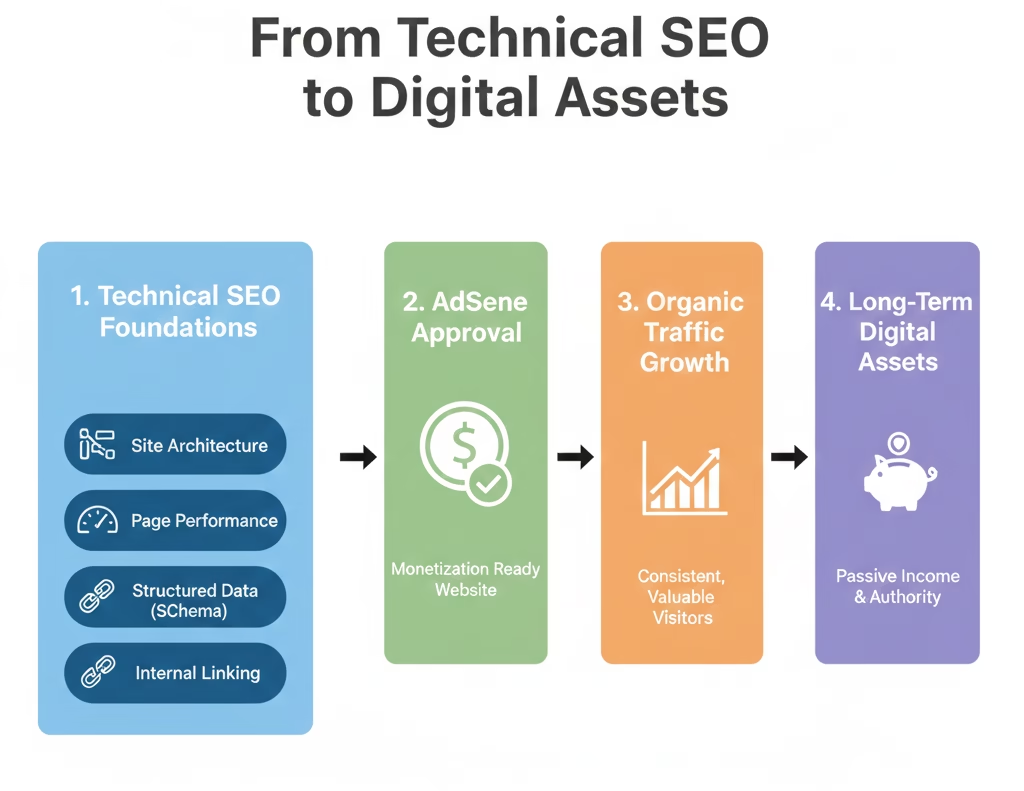
Building Technical Foundations for AdSense Approval
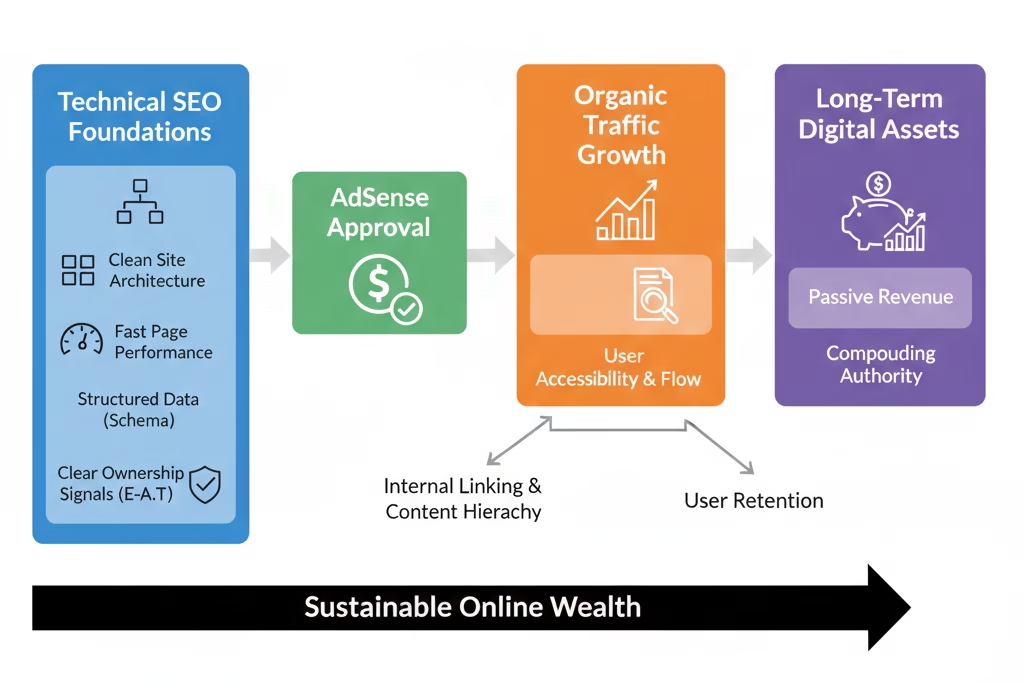
AdSense approval depends heavily on site quality signals. Technical clarity plays a major role.
Important factors include
• Clean navigation
• Accessible content
• Clear ownership signals
• Fast and stable performance
Many new bloggers fail not because of content quality, but because technical foundations are weak. Learning from real experiences building AdSense approved tech sites from the ground up provides clarity, especially when reviewing step by step approaches to launching compliant technical blogs.
Turning Traffic Into Long Term Digital Assets
Traffic alone is fragile. Assets compound.
When technical SEO supports
• Internal linking
• Content hierarchy
• User retention
Traffic turns into long term value. This mindset is critical for anyone earning through content. The transition from traffic chasing to asset building is explained clearly when studying how blog traffic can be transformed into long term digital assets, which mirrors the principles in building sustainable value from organic traffic systems.
Common Technical SEO Mistakes I See Repeatedly
Mistakes repeat because people copy tactics without understanding purpose.
Over Optimization and Tool Dependency
Tools are useful. They are not truth.
I often see sites damaged by
• Excessive schema
• Aggressive internal linking
• Unnecessary redirects
When every recommendation is applied blindly, clarity disappears.
Ignoring Internal Linking Systems
Internal linking is often postponed. This is a mistake.
Weak internal linking leads to
• Poor crawl prioritization
• Lower engagement
• Reduced monetization potential
Improving internal link systems consistently increases session duration and revenue. The connection between internal structure and earnings becomes clear when reviewing how internal linking improves page value and session depth, which aligns closely with using internal links to increase AdSense performance naturally.
FAQ
How long does technical SEO take to show results
Technical improvements often show early crawl and indexing changes within weeks. Ranking stability and growth usually take several months as AI systems learn behavior patterns.
Does AI replace technical SEO fundamentals
No. AI increases the importance of fundamentals. It rewards clarity, consistency, and structure more than shortcuts.
Is schema required for rankings
Schema is not mandatory, but it reduces ambiguity. In competitive spaces, it often supports visibility indirectly.
How often should technical SEO audits be done
Light monitoring should be continuous. Full audits are best done quarterly or after major changes.
Can small blogs compete in AI driven search
Yes. Smaller sites often perform better when structure and focus are strong.
Do AI tools guarantee better SEO results
No. Tools assist analysis. Strategy and judgment remain human responsibilities.
Conclusion
Technical SEO in 2026 is not about chasing algorithms. It is about building systems that make sense.
AI driven search rewards sites that communicate clearly, serve users consistently, and reduce uncertainty. When structure, performance, security, and internal connections align, growth becomes stable.
I have seen trends come and go. What remains is this truth. Sites built with patience and clarity last longer than those built for shortcuts.
If you treat technical SEO as a foundation instead of a checklist, your site stops reacting to updates and starts benefiting from them.
That is the difference between surviving search changes and building something that endures.