Table of Contents
I remember the shift clearly. In early 2025, one of my long-term tech blog clients was doing everything “right” by old standards. Content was published consistently. Reviews were detailed. Keywords were researched manually. Yet traffic was slipping month after month, while competitors with smaller teams were climbing past them in search results.
The difference was not effort. It was systems.
Those competitors were using AI tools for SEO content and digital marketing not as shortcuts, but as force multipliers. They were planning content in clusters instead of isolated posts. They were aligning pages to intent instead of chasing volume. And they were adapting faster to how Google itself was changing.
After more than 15 years working across SEO, tech blogging, and monetized content sites, that period marked a turning point for me. AI tools stopped being experimental and became foundational. Not because they could write faster, but because they could see patterns humans could not and execute consistently without fatigue.
This guide is written for publishers, bloggers, and digital marketers who want to use AI responsibly and strategically. It is not a beginner tool roundup. It is a practical authority framework for building SEO content and digital marketing systems that survive algorithm shifts, scale sustainably, and earn trust.
Why AI Tools Matter in the AI Search Era
Search today looks nothing like it did even three years ago. Google’s introduction of AI Overviews, stronger entity understanding, and aggressive zero-click experiences fundamentally changed how visibility is earned.
Ranking is no longer just about being “first.” It is about being understood.
AI tools matter now because modern SEO is less about guessing and more about interpretation. Search engines analyze relationships between topics, entities, and intent layers at a scale no human team can replicate manually. AI tools help publishers operate at that same level of abstraction.
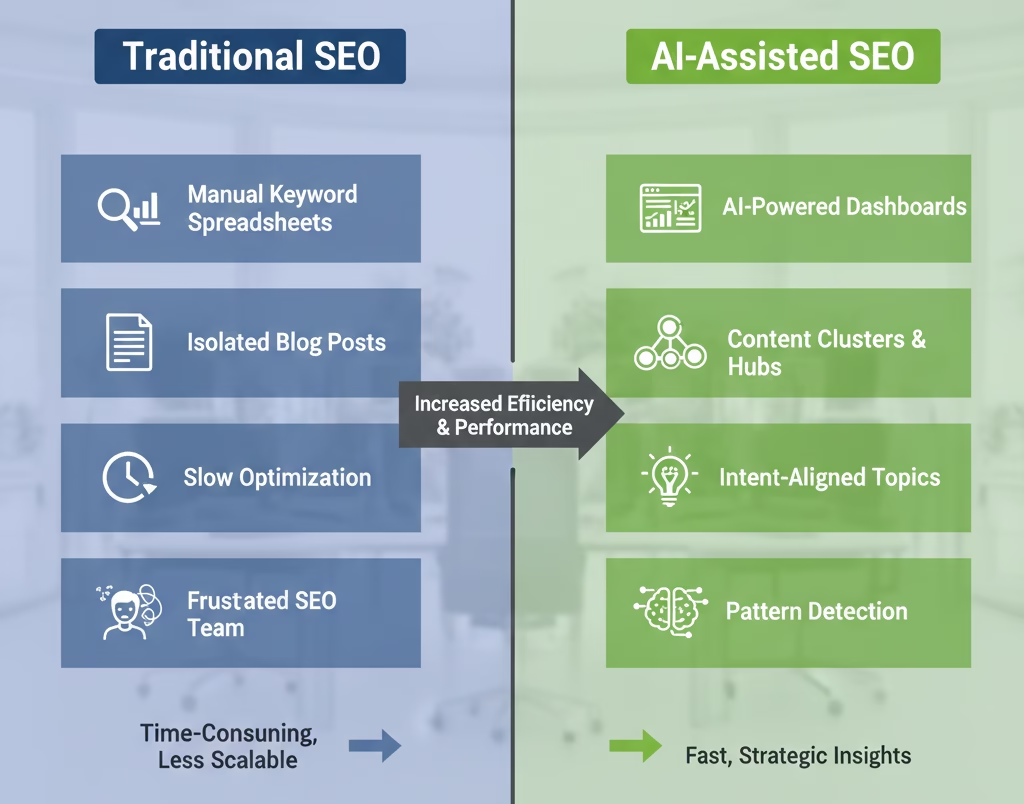
Traditional SEO workflows relied heavily on:
- Manual keyword lists
- Spreadsheet-based planning
- Linear publishing calendars
- Reactive optimization
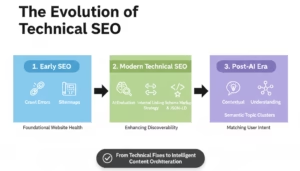
That approach breaks down in an environment where SERPs shift weekly and user intent fragments across informational, investigational, and transactional layers.
AI-powered SEO tools analyze entire result pages in seconds, detect content gaps across clusters, and highlight opportunities humans often miss. They do not replace strategy. They accelerate strategic clarity.
For tech blogs especially, the stakes are higher. AI Overviews now absorb a significant portion of informational clicks. Sites that fail to cover topics comprehensively or clearly lose exposure even when they technically rank. AI tools help identify how to structure content so it feeds both traditional rankings and AI-driven summaries.
If you want a deeper understanding of how search itself has evolved, see our pillar on SEO for Tech Blogs in the AI Search Era.
From Keywords to Intent Layers and Entities
One of the biggest misconceptions about AI tools for SEO content is that they are just faster keyword generators. In reality, their real power lies in intent interpretation.
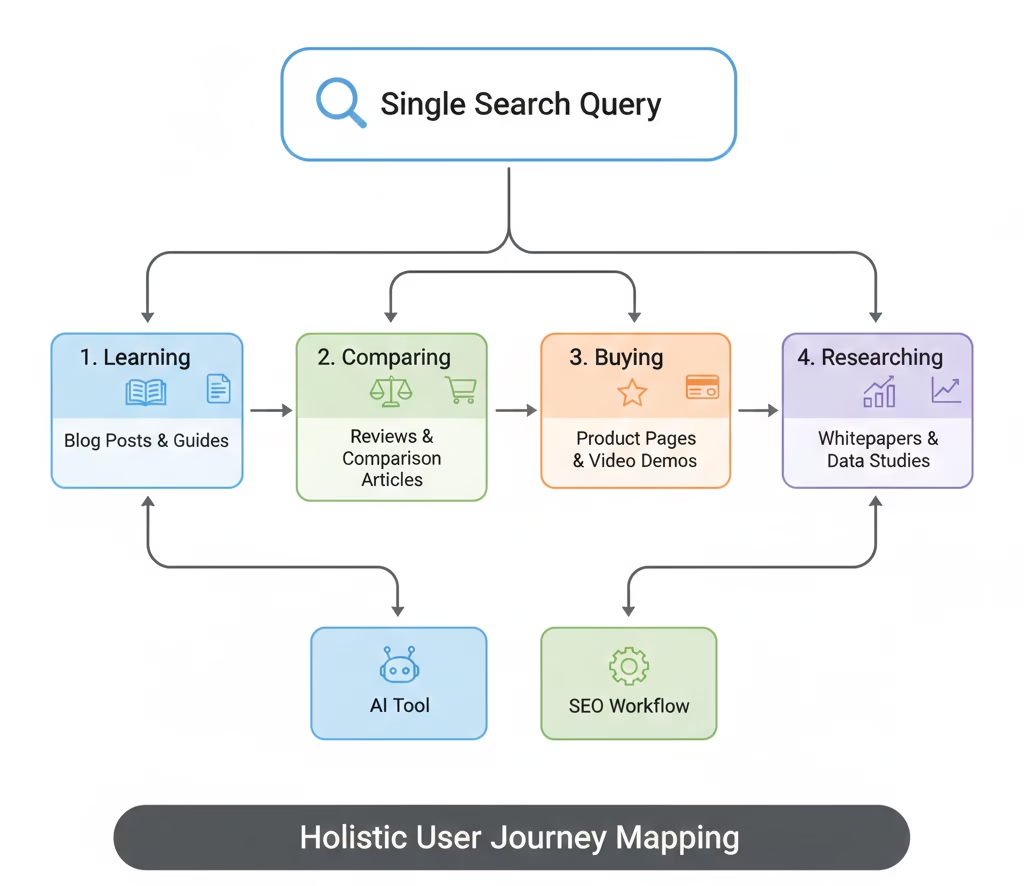
Modern search queries rarely represent a single goal. A query like “AI tools for SEO” can signal:
- A beginner seeking explanations
- A blogger comparing tools
- A buyer evaluating subscriptions
- A researcher mapping workflows
AI-powered tools analyze how Google satisfies each of these intents across the SERP. They identify which formats dominate, which entities recur, and which subtopics are required to be considered authoritative.
This is where many manual workflows fail. Humans tend to optimize for what they think the query means. AI tools optimize for what the search engine is actually rewarding.
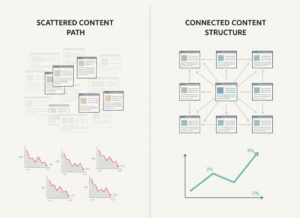
Entity-based analysis also matters more than ever. Google no longer evaluates pages in isolation. It evaluates how well a site demonstrates topical authority across connected concepts. AI tools help surface these relationships and ensure your content supports itself through internal context.
This shift is why isolated posts struggle, while structured topic clusters grow.
The AI SEO Stack Explained
To use AI effectively, you need to understand the functional layers involved. The mistake most publishers make is adopting tools randomly without understanding how they fit together.
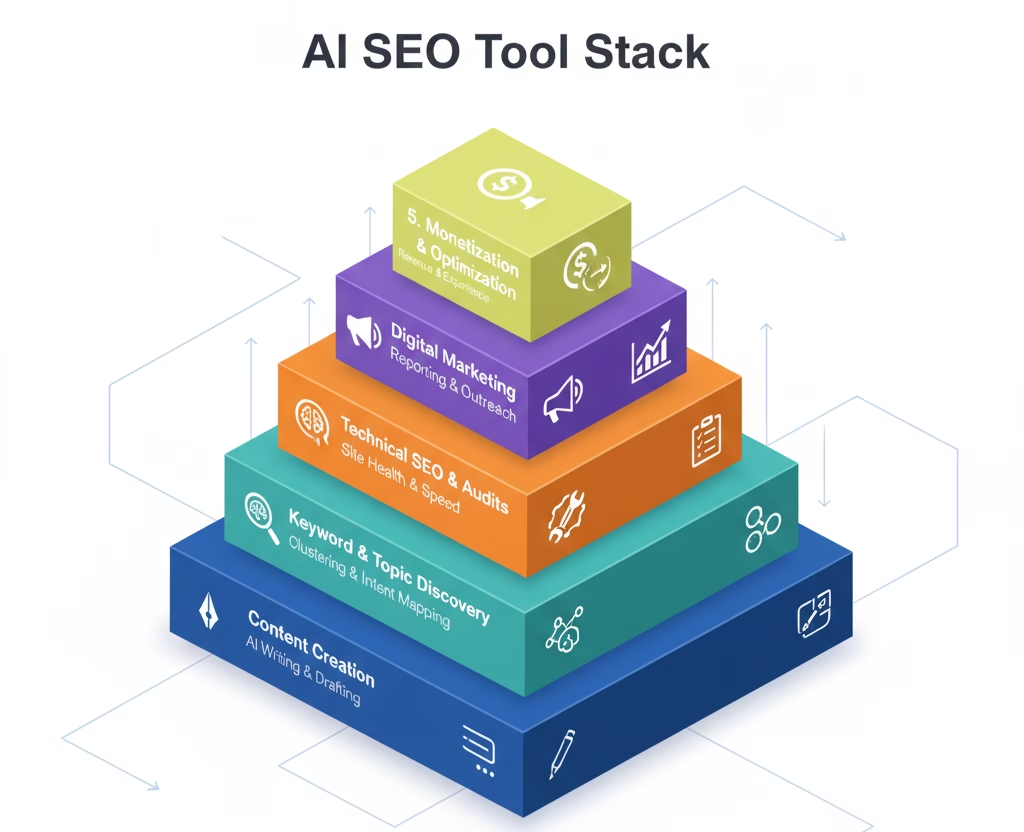
AI tools for SEO content and digital marketing fall into five core layers. Each layer solves a different problem.
AI for Content Creation
Content creation tools assist with drafting, outlining, and structuring articles. Their primary value is not speed alone, but consistency and coverage.
Used correctly, they help:
- Build clear outlines aligned with SERPs
- Maintain tone across large sites
- Reduce friction in long-form publishing
Used incorrectly, they produce generic, shallow content.
The key is restraint. AI should generate frameworks and drafts that humans refine. This preserves originality while eliminating repetitive groundwork.
You can explore this layer in depth in Best AI Tools for SEO Content Creation, where we break down practical use cases, limitations, and workflows.
AI for Keyword Research and Topic Discovery
This layer is the foundation of scalable SEO.
Modern AI-powered keyword tools do far more than show volume and difficulty. They:
- Group keywords into topic clusters
- Predict intent mismatches
- Identify cannibalization risks
- Surface content gaps competitors ignore
Instead of asking “Which keyword should I target?”, the better question becomes “Which topic should I own?”
AI helps answer that by mapping entire landscapes rather than individual phrases. This is essential in competitive niches like digital marketing and tech.
For a full breakdown, see AI Tools for Keyword Research and Content Gap Analysis.
AI for Technical SEO and Audits
Technical SEO is where many content-heavy sites quietly fail. Index bloat, poor internal linking, slow pages, and crawl waste erode performance without obvious symptoms.
AI-powered audits change this by:
- Prioritizing issues by impact
- Detecting patterns across thousands of URLs
- Highlighting internal linking opportunities automatically
Instead of running occasional audits, AI allows continuous site health monitoring. This is especially important for WordPress-based tech blogs that scale content rapidly.
We cover this layer in AI Tools for Technical SEO Audits.
AI for Digital Marketing Automation
SEO does not exist in isolation. The best-performing sites amplify content across multiple channels.
AI tools extend content into:
- Email sequences
- Social snippets
- Short-form video scripts
- Lead nurturing flows
This allows one strong article to generate multiple touchpoints without multiplying workload. For solo creators and small teams, this is often the difference between stagnation and growth.
Learn more in How AI Tools Are Reshaping Digital Marketing Workflows.
AI for Monetization and Optimization
The final layer focuses on outcomes. Traffic alone does not pay the bills.
AI tools help improve monetization by:
- Increasing session depth
- Optimizing internal navigation
- Identifying underperforming content
- Supporting AdSense-safe optimization
When used conservatively, AI improves engagement metrics that advertisers value without triggering quality issues.
We go deeper into this in How to Monetize Tech Blogs Using AI Tools Safely.
How AI Fits Into a Sustainable Content System
AI does not fix broken strategies. It amplifies them.
A sustainable content system treats AI as infrastructure, not a publishing engine. The goal is to reduce friction while preserving editorial standards.
A proven AI-assisted workflow looks like this:
- Research and intent mapping
Use AI tools to identify clusters, intent layers, and gaps instead of chasing single keywords. - Framework and draft creation
Generate outlines and first drafts that match SERP structure and topic coverage. - Human refinement and expertise layering
Add experience, examples, clarity, and judgment that AI cannot provide. - Optimization and internal linking
Use AI insights to strengthen structure, navigation, and topical signals. - Distribution and performance feedback
Extend content into marketing channels and refine based on real user data.
This system scales because it balances speed with accountability. Content quality improves over time instead of decaying.
For a hands-on walkthrough, see AI Content Workflow for Tech Blogs.
The Human and AI Balance That Actually Works
After years of testing across tech blogs, affiliate sites, and AdSense-driven publishers, one pattern is consistent: the sites that win long-term treat AI as an assistant, not an author.
AI excels at:
- Pattern recognition
- Data synthesis
- Structural consistency
- Repetitive tasks
Humans excel at:
- Judgment
- Context
- Accountability
- Trust building
The most reliable balance is simple. AI does the heavy lifting for research and structure. Humans own the final message.
If content cannot be confidently signed by a human editor, it should not be published. This mindset protects trust, rankings, and monetization.
Monetization Without Compromising Trust
One of the most misunderstood aspects of using AI tools for SEO content and digital marketing is monetization. Many publishers assume AI-driven scale automatically leads to higher earnings. In reality, monetization only improves when engagement and trust improve alongside scale.
Search engines do not reward sites for publishing more pages. Advertisers do not pay more because traffic numbers look impressive. Revenue grows when users stay longer, explore deeper, and return. AI tools help here by strengthening structure and relevance rather than inflating output.
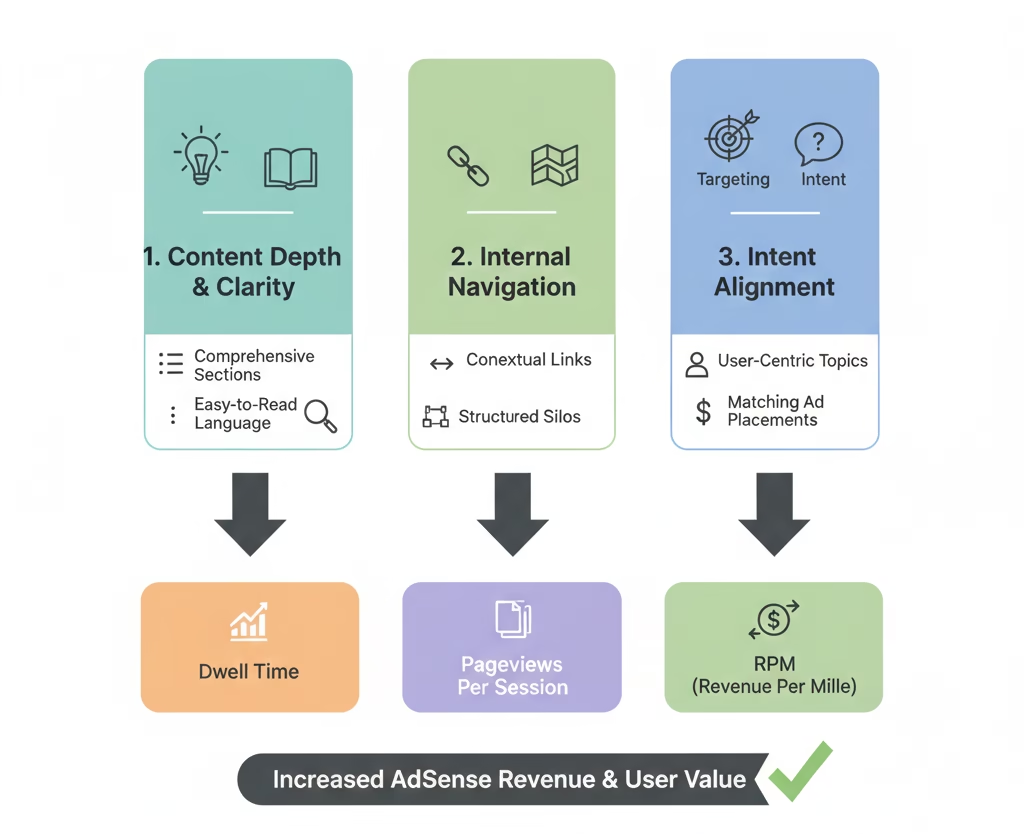
For AdSense-focused tech blogs, AI-assisted monetization works best when it supports three fundamentals.
First, content depth and clarity. AI tools can highlight thin sections, missing subtopics, or poorly structured pages that confuse users. Improving these areas increases dwell time and reduces pogo-sticking, which directly affects RPM.
Second, internal navigation. AI-powered internal linking tools identify logical connections between articles that humans often overlook. When readers move naturally from one page to another, pageviews per session increase without aggressive ad placement.
Third, intent alignment. AI tools can flag pages that attract the wrong audience, such as informational traffic landing on monetized comparison pages. Fixing these mismatches protects both user trust and advertiser signals.
Used carefully, AI supports monetization by making content easier to consume and navigate, not by forcing ads or affiliate links. This distinction is critical for long-term sustainability.
For a practical breakdown of how internal structure affects earnings, see Internal Linking Strategies for Higher RPM.
Common Mistakes Publishers Make With AI Tools
After working with AI-assisted sites across different stages of growth, the same mistakes appear repeatedly. These issues are not caused by AI itself, but by how it is deployed.
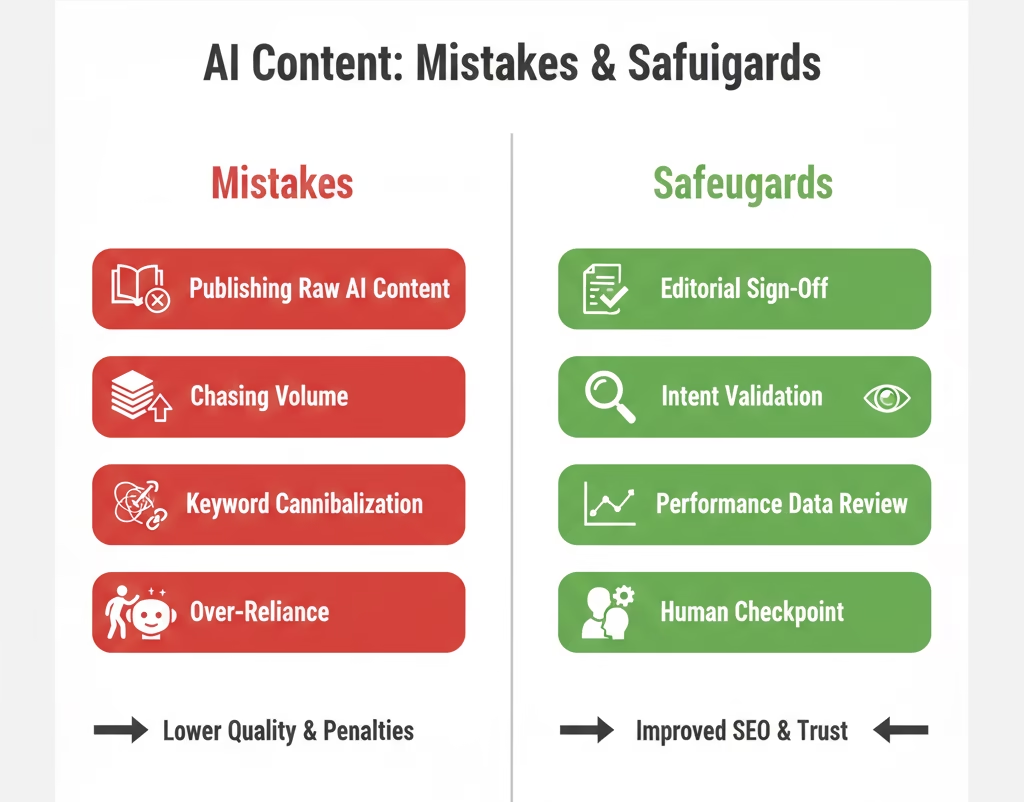
The most damaging mistake is publishing raw AI output. Content that lacks firsthand insight, specificity, or accountability quickly erodes trust. Even when rankings hold temporarily, engagement metrics decline and recovery becomes harder over time.
Another common error is chasing volume instead of intent. AI tools make it easy to generate hundreds of topic ideas, but publishing broadly without a clear authority focus dilutes topical signals. Search engines reward coherence, not noise.
Keyword cannibalization is another frequent issue. AI-generated outlines often overlap unless carefully reviewed. Multiple pages competing for the same intent weaken each other and slow growth.
Finally, many publishers rely too heavily on AI recommendations without validating them against real performance data. AI predictions are directional, not definitive. Search Console and analytics should always have the final say.
Avoiding these mistakes requires discipline, not more tools.
How to Use AI Responsibly at Scale
Scaling responsibly means setting clear boundaries for how AI is used.
In practice, this looks like:
- AI generates research, outlines, and drafts
- Humans validate intent, accuracy, and positioning
- Final edits are owned by a real editor
- Performance data informs future updates
This approach prevents quality decay as content volume increases. It also creates a feedback loop where AI outputs improve because inputs become more precise.
One effective safeguard is editorial sign-off. If a page cannot be confidently defended by a human editor, it does not go live. This single rule filters out most long-term issues.
Responsible use also means knowing when not to automate. Pages tied directly to credibility, comparisons, or recommendations benefit most from deeper human involvement.
Measuring ROI From AI Tools
AI tools should be evaluated like any other business investment. The question is not whether they are impressive, but whether they produce measurable returns.
Useful metrics include:
- Time saved per article
- Improvement in impressions and clicks
- Changes in dwell time and pages per session
- Revenue per thousand visitors
Tracking these metrics over time reveals which tools support growth and which create noise. Many publishers overestimate short-term gains while underestimating long-term compounding effects.
A simple rule helps maintain perspective. If a tool does not either save meaningful time or improve measurable outcomes within a few months, it should be reassessed.
Building Long-Term Authority With AI
Authority is not built by publishing quickly. It is built by publishing coherently over time.
AI tools help maintain this coherence by:
- Reinforcing topical coverage
- Supporting consistent structure
- Identifying gaps before competitors do
When used within a clear editorial framework, AI accelerates authority building rather than undermining it. The key is consistency of intent, not consistency of output.
This is especially important in tech niches where concepts evolve quickly. AI tools allow faster updates, cleaner revisions, and more responsive content maintenance without sacrificing quality.
Final Thoughts
AI tools for SEO content and digital marketing are now part of the publishing baseline. Ignoring them puts sites at a disadvantage. Using them without structure puts credibility at risk.
The advantage belongs to publishers who treat AI as infrastructure rather than automation. When AI supports research, structure, and optimization, and humans own judgment and trust, content systems scale sustainably.
This page is designed to be your central reference point. Each section connects to deeper guides that explore specific layers in detail. Start with one improvement area, implement it well, and expand gradually.
Authority compounds when systems are built with intention.
If you want to continue, begin with SEO for Tech Blogs in the AI Search Era and build forward from there.