Over the past year, Google has been quietly experimenting with AI-powered search features. First, we saw AI Overviews, which gave users AI-generated summaries at the top of search results. While many website owners and SEO professionals were concerned about this feature, it was only the warm-up round. The real game-changer is Google’s upcoming AI Mode — a feature that could completely reshape how people search and how websites receive traffic.
If you think AI Overviews were bad for organic clicks, AI Mode might reduce them even further. For some, it could mean losing a significant share of search traffic. For others, especially businesses, it could bring fewer but more targeted and valuable visitors.
Let’s break down what Google AI Mode is, how it works, who gets it first, and what it means for SEO, bloggers, and businesses — along with practical strategies to prepare for this massive shift.
Table of Contents
What Is Google AI Mode?
Google AI Mode is an experimental search experience currently available only to selected U.S. users in English. Access is limited to those who joined the waitlist or have a Google One Premium Plan. Once you get access, you can use it by visiting:
google.com/aimode or by simply searching on Google and selecting the AI Mode tab that appears.
While still in testing, it’s expected that Google could roll it out globally very quickly — and possibly make it the default search view. If that happens, almost all searches would show AI-generated answers first, before traditional blue links.
How Google AI Mode Works
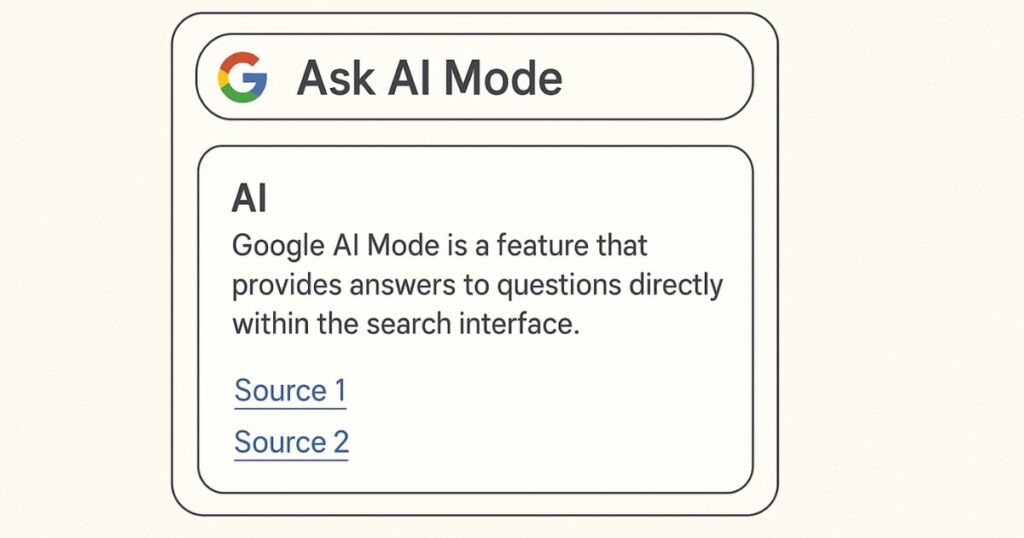
When you open AI Mode, you’ll notice a big change — no traditional search bar at the top. Instead, there’s a small prompt labeled “Ask AI Mode” where Google encourages you to type full, conversational questions rather than short keywords.
For example:
- Instead of typing cheap hotels Manali, you might type How do I find cheap hotels in Manali?
Once you enter your query, AI Mode quickly generates a colorful, animated answer card with a summary and supporting points. Underneath, you’ll see links to sources where the information came from.
It’s very similar to ChatGPT with browsing, but directly integrated into Google Search.
Example 1: Travel Queries
Let’s say you ask: “How do I find cheap hotels in Manali?”
AI Mode might give you:
- Define your budget and priorities
- Use online booking platforms
- Consider hostels or guesthouses
- Travel during off-season
- Explore different neighborhoods
- Look for deals and discounts
- Contact hotels directly
These are valid tips and the AI also links to the websites it used as sources, such as travel blogs or booking platforms.
The problem for publishers: If a user already gets the full answer here, there’s little incentive to click through to the original site.
Example 2: Itinerary Planning
When asked for a one-day Haridwar trip plan, AI Mode broke the day into clear time slots — from morning visits to temples, afternoon local markets, and ending with the famous Ganga Aarti at Har Ki Pauri.
The sources included travel blogs and tourism websites, even some loosely related ones. Google is clearly pulling data from multiple relevant and semi-relevant pages, summarizing them into one neat answer.
Again, great for users — but potentially bad for sites hoping for that traffic.
Language Limitations
Right now, AI Mode is English-only. If you type a query in Hindi, you may get: “This language is not supported. We only support English.”
However, sometimes it still understands Hindi queries but answers in English. This suggests Google’s AI Mode may soon handle multiple languages, but for now, Hindi content creators aren’t directly impacted.
When AI Mode Refuses to Answer
One interesting behavior: AI Mode doesn’t always answer.
For example, when asking for “Easy steps with drawings to make samosas at home”, AI Mode sometimes avoids generating an answer and instead provides direct links to relevant blogs and YouTube videos.
Why? Likely because Google wants to avoid hallucinations (wrong answers) — a major criticism of AI Overviews. If the system isn’t confident, it passes the responsibility to external sites.
When the query is slightly rephrased, like “Easy steps to make samosas at home”, it will give a text-based answer pulled from cooking websites — again without rewarding the original publishers with much traffic.
Can AI Mode Handle Personalized Requests?
Yes — to some extent.
When asked for a skincare routine for a young Indian man with oily skin who rides a bike in New Delhi, AI Mode factored in environmental challenges (pollution, sun exposure, dust) and provided a routine with relevant product suggestions.
The sources included skincare blogs, product pages, and Q&A forums. This is more personalized than a standard search, but still not 100% custom.
Impact on E-Commerce and Product Searches
AI Mode can also answer product-related queries, like “Best double-door refrigerator in India”.
It lists a few models with key specs, and then offers links to the sources — sometimes just two, sometimes ten. There’s no guarantee of how many sites will be shown, meaning click-through rates could drop sharply for many e-commerce sites.
The Traffic Problem for Websites
Here’s the tough truth:
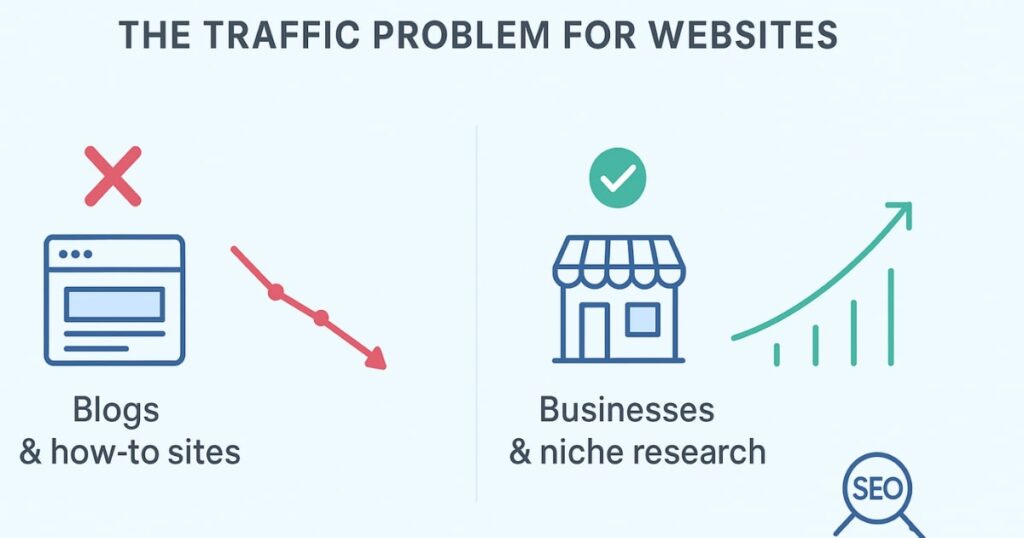
- Blogs, news sites, and how-to content will likely lose significant traffic. If AI Mode answers the question fully, users won’t click.
- Business websites might lose some traffic, but the visitors they do get will be more relevant and likely to convert.
For example, if your business site previously got 100,000 visits and 100 leads, you might drop to 10,000 visits but still get the same 100 leads — maybe even 150 — because only serious customers will click through.
Deep Research Content Might Win
Not all websites will suffer equally. Pages offering in-depth, niche, or expert-level information could benefit because AI Mode will still need them to generate high-quality summaries.
The challenge is to become the trusted source AI Mode pulls from. That means:
- High-quality, original research
- Clear structure and formatting
- Answering related questions in detail
- Earning strong backlinks to boost authority
How-to Blogs Face the Biggest Hit
Consider a query like: “How to connect my domain to Google Workspace.”
Previously, users would visit multiple step-by-step blog posts. Now, AI Mode delivers a complete, correct, ready-to-use answer directly in the search results, along with references to 10 different sites.
Over time, Google’s own documentation will likely dominate as the main source, pushing independent blogs further down.
What Website Owners Should Do Now
If you wait until AI Mode launches in your country, it’ll be too late. Start adapting now:
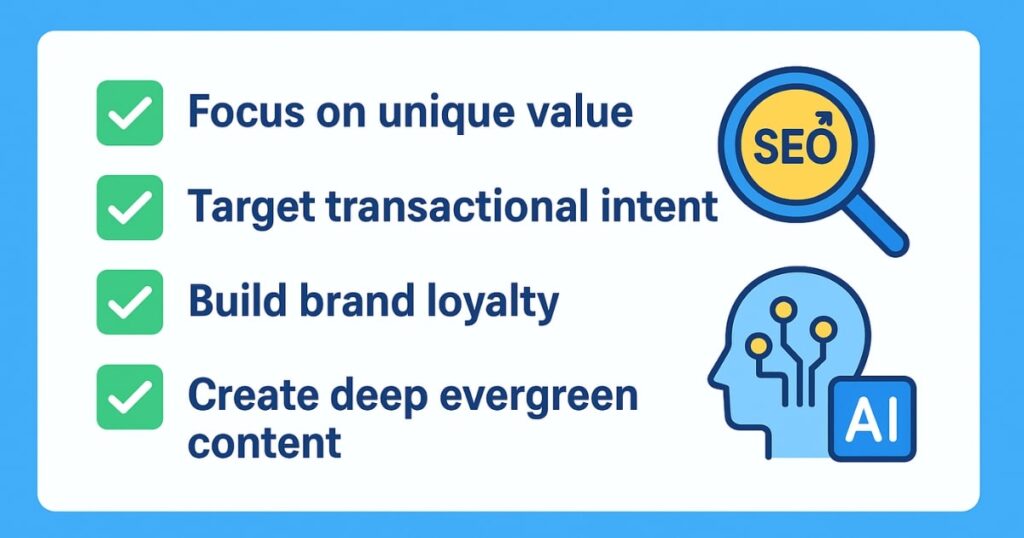
- Focus on unique value — Provide insights, case studies, or experiences AI can’t easily summarize.
- Target transactional intent — Rank for queries where the user is ready to buy, book, or sign up.
- Build brand loyalty — Make people visit your site directly instead of relying solely on Google.
- Create deep, evergreen content — AI Mode still needs high-quality references.
The shift is inevitable — the question is whether you’ll adapt in time.
FAQs
1. What is Google AI Mode?
It’s an experimental search interface that uses AI to directly answer queries in a conversational format, pulling data from multiple sources.
2. How is AI Mode different from AI Overviews?
AI Overviews are short summaries added to regular search results, while AI Mode is a dedicated search experience that can replace the traditional results page.
3. Who can access Google AI Mode now?
Only selected U.S.-based users who joined the waitlist or have a Google One Premium Plan.
4. Will AI Mode reduce website traffic?
Yes, especially for blogs, news sites, and how-to content. Business sites may see fewer but more relevant visitors.
5. Does AI Mode support Hindi?
Currently, it’s English-only, though it sometimes understands Hindi queries and responds in English.
6. Can AI Mode provide personalized answers?
It can tailor responses to certain personal details, but it’s not fully customized like a human expert.
7. How can site owners prepare for AI Mode?
Focus on high-quality, unique, and deep content that positions your site as a trusted reference source.