Table of Contents
Over the years, I have launched several tech blogs from scratch, watching some thrive on patient organic strategies while others got quick boosts from paid campaigns that faded fast. New bloggers often face this choice early, wondering which path builds a sustainable audience without burning cash. For new blogs, the answer leans heavily toward organic growth for long-term success, especially if you aim for AdSense revenue or steady readership.
Why Organic Wins for New Blogs Long-Term
When I started my first tech blog in 2012, I poured everything into organic search because my budget was zero beyond hosting fees. Organic traffic comes from search engines ranking your content naturally, driven by quality posts, keyword research, and site structure. It builds topical authority over months, turning one post into a traffic magnet that pulls in readers year after year.
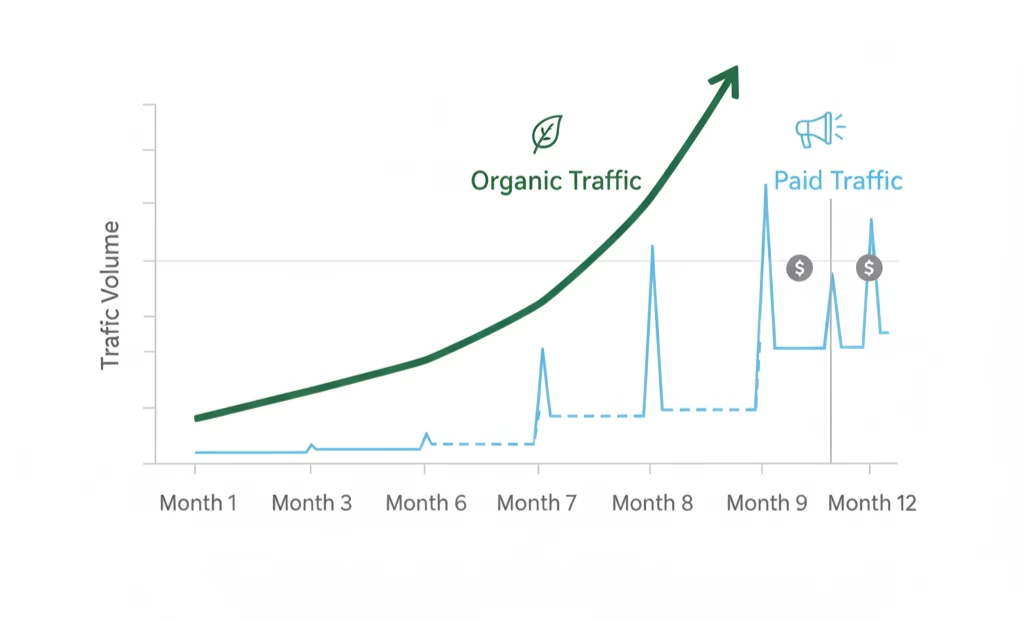
Unlike paid ads, where traffic stops when you pause spending, organic delivers compounding returns. Users trust these results more, leading to higher click-through rates and longer sessions on your site. For a new blog, this means focusing on evergreen content like guides on AI tools or SEO tips. Have you ever checked your analytics and seen a post from six months ago suddenly spiking? That is organic at work.
It lowers costs over time, with initial efforts in content creation paying off indefinitely. Paid shines for speed, but organic fosters loyalty. Readers who find you through search often explore multiple pages, boosting session duration and AdSense RPM. I once advised a student blogger targeting online earning topics. She skipped ads, optimized 20 posts for intent, and hit 10,000 monthly visitors in nine months. No ad debt, just steady growth.
Organic suits low-budget creators because it scales with effort, not wallet size. In the AI search era, Google favors entity-based SEO and clusters, making organic even stronger for tech niches. Build it right, and your blog becomes a reference hub. This foundation supports everything from internal linking to future monetization. Learn more about these dynamics in this detailed comparison on organic vs paid ads from Fierce Creative.
The Real Costs of Paid Digital Marketing
Paid digital marketing tempted me during a 2018 launch when I needed fast validation. Platforms like Google Ads or Facebook Ads let you target keywords or audiences instantly, bidding for top spots. A $500 campaign could drive 1,000 clicks in days, perfect for testing headlines or landing pages.
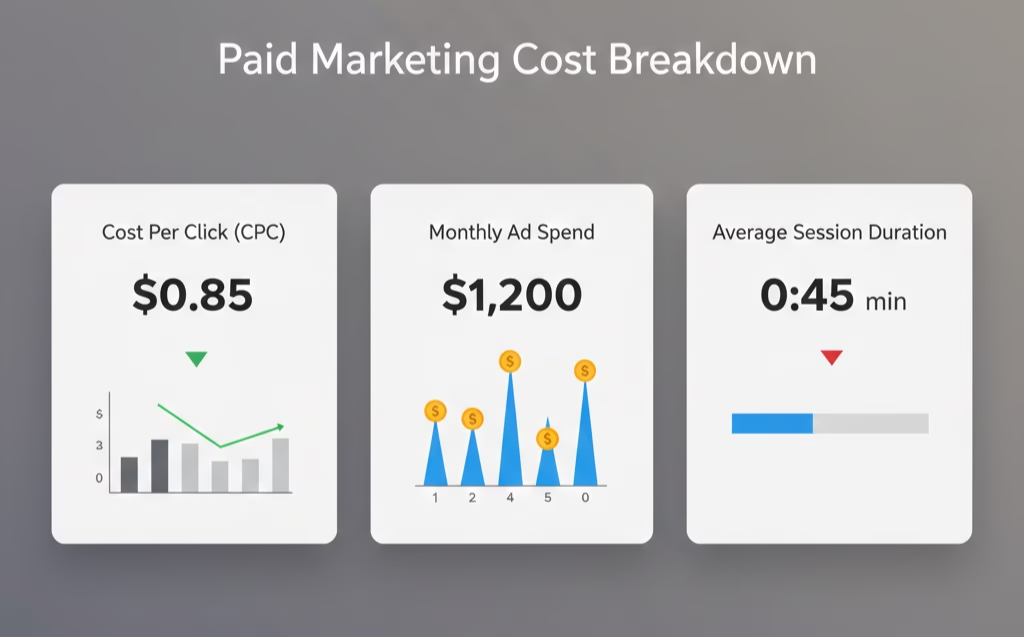
But costs add up quick. For small blogs, PPC budgets start at $1,000 monthly, including agency fees and ad spend. Cost per click varies by niche; tech topics like AI tools hit $1 to $10 per visitor. New sites lack data, so expect higher costs as algorithms learn your audience. ROI looks good short-term, around $17 per $1 spent, but drops without optimization.
Traffic vanishes when budgets end, leaving no equity. I ran a $2,000 test on a niche blog; clicks poured in, but bounce rates topped 70% because visitors sought quick info, not deep reads. AdSense earnings suffered from short sessions. Ever launched an ad only to watch spend evaporate without sales? Common for beginners. Paid demands skills in A/B testing, negative keywords, and retargeting. Without them, you waste money on low-intent clicks.
Social ads add algorithm changes, where reach shrinks unless you boost posts. For new blogs, paid fits launches or seasonal pushes, but not core strategy. It ignores user trust; people skip ads. Budgets for startups range $100 to $5,000 monthly per channel, unsustainable without revenue. Tie this to broader goals. In a content-driven setup, paid tests ideas to feed organic content, but alone, it builds nothing lasting. Check out this analysis on SEO vs PPC differences from WebFX for deeper stats.
Pros and Cons Comparison Table
| Aspect | Organic Digital Marketing | Paid Digital Marketing |
|---|---|---|
| Time to Results | 3-9 months, builds steadily | Immediate, but stops on pause |
| Cost Structure | Upfront time/content, low ongoing | Ongoing per click, $1k+/month for new blogs |
| Traffic Quality | High intent, longer sessions, better AdSense | Quick but higher bounce, lower RPM |
| Sustainability | Compounds forever with maintenance | None without spend |
| Scalability | Effort-based, unlimited potential | Budget-limited |
| Trust and CTR | Higher clicks (2-5x ads), builds authority | Lower trust, ad blindness |
This table highlights why organic edges out for new blogs. Use it to map your goals.
Common Mistakes New Bloggers Make
New bloggers chase paid shortcuts thinking traffic equals success, but I learned the hard way in 2015. One mistake is ignoring search intent; ads bring broad visitors, but without matching content, they bounce. Organic forces alignment, teaching you what readers want.
Another pitfall: underestimating organic timelines. Expecting top ranks in weeks leads to quitting. I see creators drop SEO after 60 days, missing the six-month mark where momentum hits. Paid masks this, creating false hope.
Over-relying on one channel hurts too. Pure paid drains budgets without brand trust, while neglected organic misses free gains. A client blended poorly, spending 80% on ads while SEO languished, resulting in zero equity after six months.
Skipping analytics is fatal. Without tracking RPM, bounce rates, or conversions, you blindfire budgets. Organic users engage more, but paid needs constant tweaks.
Forgetting mobile or core web vitals tanks both. Ads to slow sites waste money; organic suffers rankings. Tech bloggers overlook image SEO, hurting discoverability.
The biggest? No hybrid mindset. Paid informs organic, like using ad data for keyword mapping. Avoid siloed thinking. This guide on paid vs organic search from Positional breaks down these errors well.
Step-by-Step Organic Strategy for Beginners
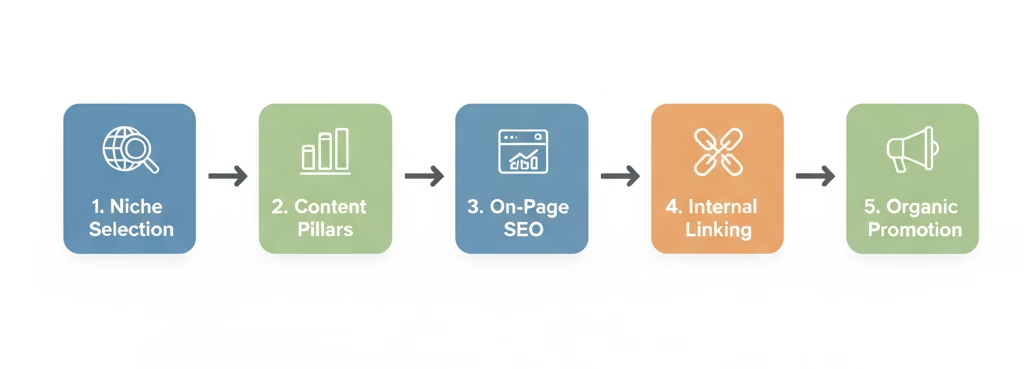
Start with niche selection. Pick tech blogging subtopics like AI tools where competition allows entry. Research via Google Search Console later, but begin with tools like Ahrefs free tier.
Step 1: Build content pillars. Create 5-10 evergreen guides around search intent. For a new blog, target informational queries like “best free SEO tools.” Write 2000+ words each, naturally including keyword variations. Use H2s, bullets, and internal links for flow.
Step 2: Optimize on-page. Bold key terms, add schema markup for rich snippets. Ensure core web vitals pass via fast hosting like SiteGround. Compress images for speed.
Step 3: Layer internal linking. Connect clusters to pillars, like linking SEO silos discussions to your main digital marketing pillar. This boosts dwell time. For details on internal linking as a growth lever, see how it strengthens signals.
Step 4: Promote organically. Share on Reddit, LinkedIn groups. Guest post for backlinks. Track with free Google Analytics.
Step 5: Audit monthly. Fix keyword cannibalization using GSC. Update old posts. Aim for 2-4 new pieces weekly.
This built my sites to 50k visitors monthly. Patience pays; track progress weekly.
Smart Ways to Use Paid as a Boost
Paid is not evil; I use it sparingly for new blogs. Run retargeting ads to nurture organic visitors who bounced. Budget $100 weekly on Google Ads for branded terms once you have 1,000 monthly organics.
Test content upgrades. Promote top posts via Facebook to similar audiences. A $300 spend once amplified one blog’s reach 5x.
Use for seasonal spikes, like AI updates coverage. But cap at 20% of efforts. Feed data back: ad keywords become organic targets.
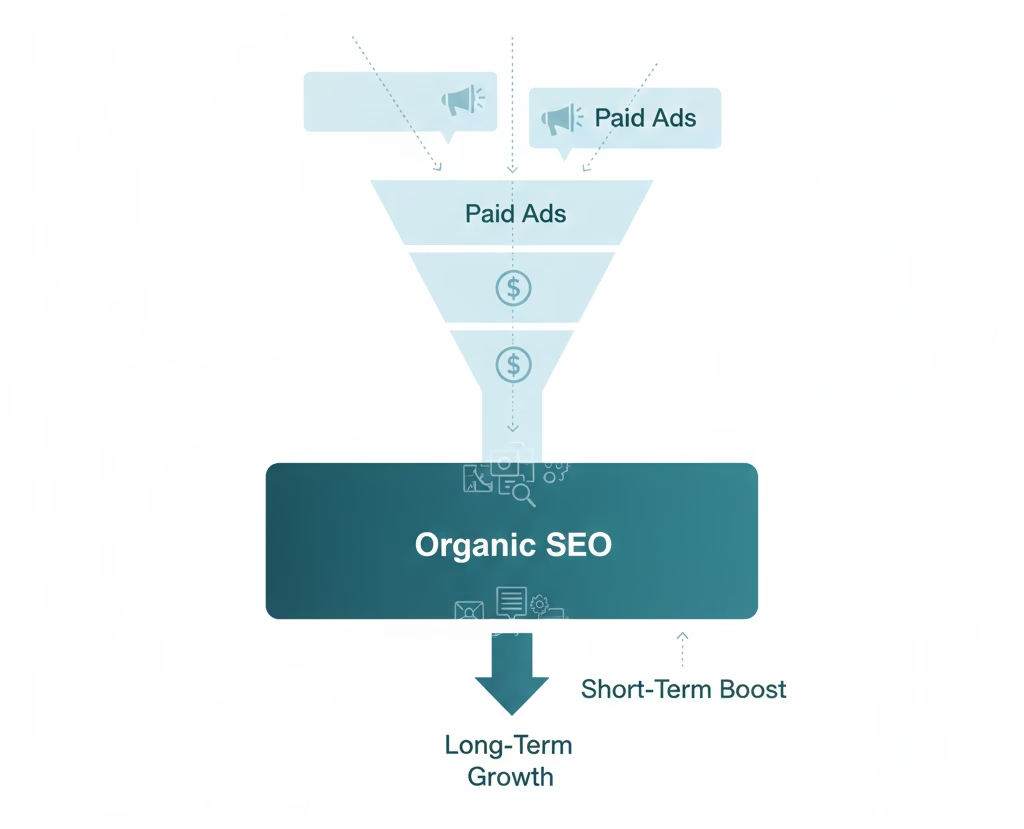
In digital marketing funnels, paid tops the awareness stage, organic nurtures mid-funnel. For low-budget, start with Pinterest ads for visual tech content; cheap CPC.
Avoid broad campaigns. Target long-tail like “SEO for tech blogs 2026.” Track ROAS; stop if under 2x. On a 2024 launch, $500 in LinkedIn ads drove 200 sign-ups, converting 10% to email list for organic nurturing. Explore hybrid tips in this RankTracker post on AdSense impact.
Hybrid Approach: Best of Both Worlds
The future is hybrid strategies. Use paid to validate organic ideas. For instance, advertise a post; high engagement? Double down with SEO updates.
Allocate 70/30: organic heavy. Paid accelerates top-of-funnel while SEO builds depth. Cases show 40% revenue lifts from this.
For AdSense sites, organic primes high-RPM pages; paid tests layouts. In 2026 AI tools reshape this, automating ad optimization.
Track cross-impact; organic boosts paid quality scores, lowering costs. Stay adaptable. This ROI comparison from Kinetic Marketing shows real numbers.
FAQ
What if my new blog has no budget at all?
Focus on organic SEO. Publish two posts weekly on intent-focused topics like AI tools. Use free tools for keyword placement and internal linking. Share in Reddit or LinkedIn groups. Results start in 4-6 months.
How long until organic traffic beats paid spend?
Expect 6-12 months for new blogs. Early months build rankings. Momentum hits around month six through topical authority. Track via Google Analytics and Search Console. Reinvest small AdSense wins.
Is paid better for quick AdSense approval?
No, organic signals win. Quality content and engagement build trust faster. Paid traffic risks high bounces that flag reviewers. Prioritize 15-20 solid posts first.
Can I use AI tools in organic strategy?
Yes, for content gaps and outlines. Always human-edit for voice. Tools like AI rank trackers spot issues early. Blend with your insights to pass helpful content checks. See AI tools for SEO content.
Paid ads on social vs search: which for blogs?
Search ads suit tech blogs best for intent. Social ads build awareness but bounce more. Google Ads often deliver stronger ROAS. Start with $50 tests.
How to measure ROI across both?
Apply UTM tags and set Analytics goals. Compare RPM from AdSense and cost per acquisition. Organic pulls ahead long-term with 5-10x returns.
Hybrid risks for beginners?
Main risk is over-spending paid. Cap at $100 weekly. Run A/B tests. Channel data back to SEO content. Use spreadsheets to stay disciplined.
Conclusion
Mastering organic vs paid transformed my blogs from experiments to earners. Organic lays the enduring base; paid adds sparks wisely. Think back to that first blog I launched with nothing but time and conviction. It took persistence through flat months, but watching visitors return month after month, exploring linked guides on SEO silos or AI tools, showed the power of patient building.
Organic strategies create assets that appreciate, much like real estate in the digital marketing world. You own the traffic, the trust, and the compounding growth. Paid campaigns, when used right, test what resonates and accelerate discovery, but they never replace that foundation. Over fifteen years, I have seen too many creators burn out chasing ad highs, only to pivot back to content-first approaches that last.
Commit to content today. Your new blog holds potential for lasting impact. Map those clusters now, weave in smart internal links, nurture every visitor with value, and growth follows naturally. The blogs that thrive in 2026 and beyond treat marketing as a marathon, not a sprint. Start building yours with organic at the core, and you will create something truly sustainable. What step will you take first thing tomorrow?