The world of SEO, digital marketing, and PPC never stands still — and July 2025 proved that once again. From Google Ads policy changes to AI-driven search updates, from Cloudflare’s new AI crawler protection to fresh tools in Google Analytics, this month brought major shifts that will shape how marketers plan campaigns, optimize websites, and protect online content.
If you run a business online or manage client campaigns, staying updated isn’t optional anymore — it’s survival. Let’s break down every important update from July 2025 in detail, what it means for you, and how you can prepare.
Table of Contents
Cloudflare’s “Pay for Crawl” Program: AI Bots Need Permission
July started with a surprising headline — and it wasn’t from Google or Microsoft. Cloudflare announced a new program called “Pay for Crawl” designed to block AI crawlers from freely scraping websites in its network.
Here’s the deal: if any AI bot tries to crawl a Cloudflare-protected site, the system rejects the request by default. Website owners can choose to enable crawling, but only if the AI company pays for access.

On paper, it sounds like a bold move to protect content creators. But will it work? That’s where skepticism kicks in. Many AI companies historically ignored permissions, scraping data without consent. Already, tools like ChatGPT’s AI agents can bypass certain Cloudflare protections by handing over control to a user momentarily. Similarly, Perplexity’s Comet browser reportedly circumvents such measures.
While it’s uncertain how enforceable this will be, the industry applauds Cloudflare’s intent. Big tech companies should shoulder more responsibility for ethical AI data use — Cloudflare just took a step most have avoided.
Google Ads Requires Phone Number Verification in Message Assets
From August 1, Google Ads message assets that include a phone number will only run if that number is verified.
Previously, advertisers had free rein to use any number without checks — a loophole that could be abused. Now, unverified numbers will disable the asset entirely, meaning you could be losing leads without realizing it.
If you haven’t checked your campaigns yet, log in and verify your numbers immediately. This change strengthens trust and ensures real contact points for users.
AI Max Search Type Reporting in Google Ads
Google introduced a reporting option for its AI Max search campaigns, launched back in May.
AI Max sits between Performance Max and standard search campaigns — giving advertisers more control than PMax, but less than manual search campaigns. The new reporting column lets you measure AI Max’s impact clearly, tracking its performance alongside other campaign types.
Keyword Planner Forecasts Get Device and Location Filters
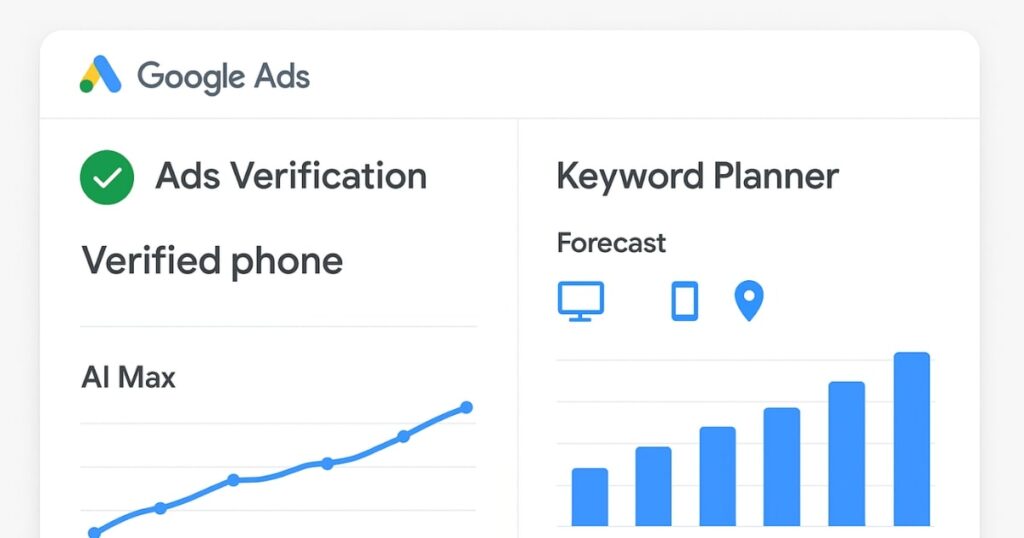
A major update to Google Keyword Planner lets you filter forecast data by device type (mobile, tablet, desktop) and location granularity (city, state, postal code).
This is especially powerful for local SEO and hyper-targeted PPC campaigns. Plus, you can visualize the data with built-in pie charts — all without losing any existing features.
For example, if you’re planning a campaign for a local restaurant, you can see exactly how many mobile searches come from a specific postal code — and plan your bidding strategy accordingly.
Google Search’s AI Mode Goes Public in India
On July 8, Google’s AI Mode rolled out to all users in India — even those not logged in, browsing in incognito mode, or avoiding personalization.
This is a big shift for organic traffic. Traditionally, click-through rates (CTR) followed impressions closely. Now, impressions may stay stable (or rise) while clicks drop sharply — a phenomenon SEOs are calling “decoupling.”
Content-heavy sites will likely feel the impact most, though even business websites may notice changes in lead flow. The full scale of this effect will only be clear in a few months.
Google Ads Editor v2.1: More Control for Campaign Management
Google Ads Editor — the offline tool for bulk campaign edits — got its 2.1 update this month, adding features like:
- Campaign-level negative keywords for Performance Max
- Ability to opt-out of specific platforms in PMax
- Desktop OS targeting
- Portrait format (9:16) image support for Demand Gen campaigns
- QR code & barcode support in promotion assets
- AI Max campaign compatibility in Search campaigns
These updates streamline workflows, especially for agencies managing multiple accounts.
Search Console Adds “Discussion Forum” Traffic Filter
Google Search Console now lets you filter performance data by traffic from discussion forums like Reddit, Quora, and similar platforms.
This means you can separately measure how much organic traffic comes from Q&A and community-driven sites — useful for identifying referral sources that may not be obvious in standard reports.
Search Analytics API Gains Data Completeness Indicator
On July 14, Google updated the Search Analytics API with an endpoint that flags whether the returned data is final or incomplete.
For developers and analysts, this removes uncertainty when using API data for automated dashboards or reports — especially in real-time monitoring scenarios.
Gmail Buttons for Google Ads Recommendations — Use With Caution
Google Ads now sends Gmail messages containing dynamic buttons that let you enable recommendations directly from the email, without logging into Ads Manager.
While convenient, this is more beneficial to Google than to advertisers. Many recommendations favor Google’s revenue goals, not yours. Accidentally clicking could enable automated changes you don’t want. Warn your team to be careful with these emails.
Search Console: Compare 24-Hour Data
The 24-hour data view in Search Console can now be compared with the same time frame from the previous day or previous year.
For high-traffic sites, this is great for spotting short-term trends. But smaller sites should use it cautiously — small traffic fluctuations can look dramatic at this scale.
Gemini 2.5 Pro Comes to AI Mode
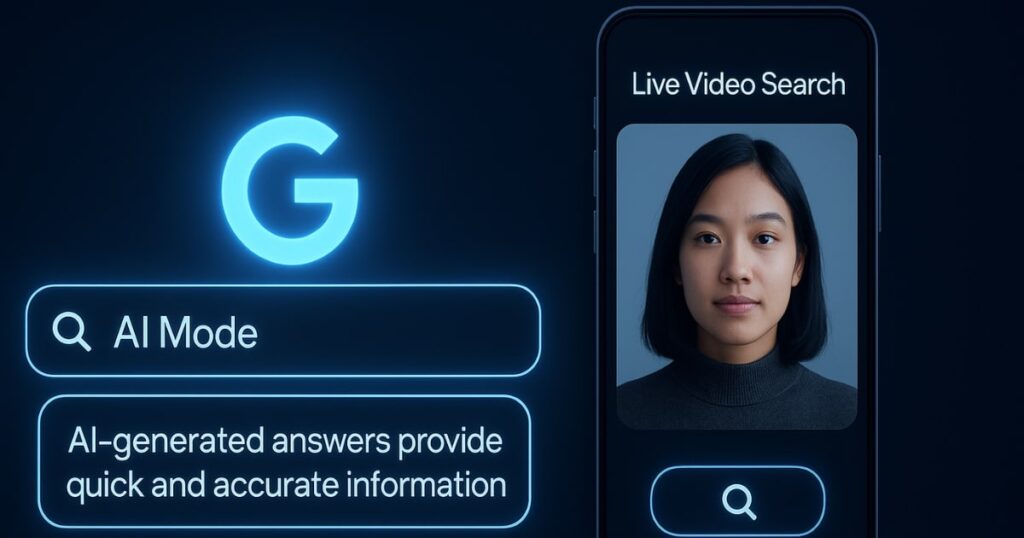
Google has integrated Gemini 2.5 Pro into AI Mode, focusing on reasoning and math skills. This move seems aimed at boosting Gemini adoption, as many users still prefer ChatGPT for consistency.
Alongside this, the US now has AI-powered local calling in Search — where Google’s AI agent calls a business for info (e.g., stock availability, appointment times) and relays it back to the user.
July Core Update Completes Rollout
On July 17, Google’s July Core Update finished rolling out. Some previously penalized sites regained traffic, but the main aim seemed to be infrastructure readiness for AI Mode expansion — which launched publicly in India and then the UK soon after.
Reddit Integration in Google Analytics
July 23 brought Reddit Ads integration into Google Analytics. Advertisers can now link accounts, import cost data, and use built-in audience and report templates for lead generation.
Google Trends API Preview
At the Search Central Deep Dive in Thailand (July 23–25), Google previewed its Google Trends API, which delivers programmatic access to search trend data from the past 5 years (excluding the most recent 48 hours).
The API is in closed beta, so you’ll need to apply for access.
Virtual Try-On for Clothing in the US
On July 24, Google launched a virtual try-on feature for apparel searches in the US. Users can upload their own photos to see how a shirt, dress, or other item would look on them — regardless of sizing or gender.
While some early tests produced funny mismatches, it’s another sign of visual search integration into e-commerce.
Live Video Search in the US
The month closed with Google’s live video search going live in the US. Users can stream a video from their camera to Google Search and ask context-specific questions — like getting guidance while repairing a bike.
It’s still slow, with noticeable delay, but could become useful for visual troubleshooting as performance improves.
FAQs
Q1: What is Google’s AI Mode and how does it affect SEO?
AI Mode integrates AI-generated answers into search results, which can reduce clicks to organic websites by providing direct answers on the SERP.
Q2: What is Cloudflare’s “Pay for Crawl” program?
It blocks AI crawlers by default and requires them to pay for content access — aiming to protect site owners from unauthorized scraping.
Q3: Should I use Gmail’s one-click Google Ads recommendation buttons?
Generally, no. Many recommendations favor Google’s goals over yours, and accidental clicks can trigger unwanted changes.
Q4: How does Keyword Planner’s new forecast filtering help marketers?
It lets you filter by device and location, making keyword forecasts more accurate for local and device-specific targeting.
Q5: What’s special about Google Ads Editor v2.1?
It adds features like negative keywords for PMax, desktop OS targeting, and QR code support — making bulk editing more powerful.
Q6: Is the Google Trends API available to everyone?
Not yet. It’s in closed beta, and you must apply for access.
Q7: Does live video search work outside the US?
Currently, no. It’s only launched in the US, but may expand later.